Transfer pricing and tax deductions upheld on established principles, while employee contributions and warranty provisions returned for fresh examinat...
Captive transfer pricing relies on industrial consumer tariffs, while genuine quotations can benchmark effluent treatment transfers under the Other Me...
Specific tariff classification for ophthalmic instruments and extended limitation principles determine the treatment of duty demands, confiscation, an...
Integrated golf function determines classification, placing launch monitors and simulators under other golf equipment rather than measuring instrument...
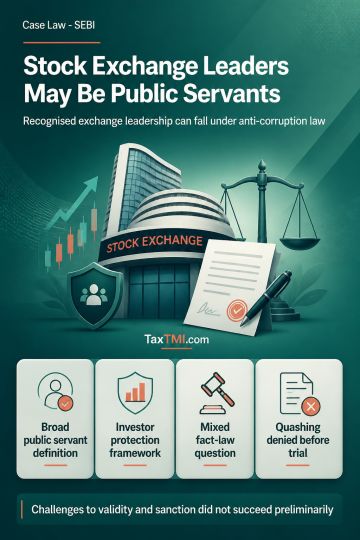
Public servant status under anti-corruption law extends to recognised stock exchange leadership; constitutional and sanction challenges do not succeed...
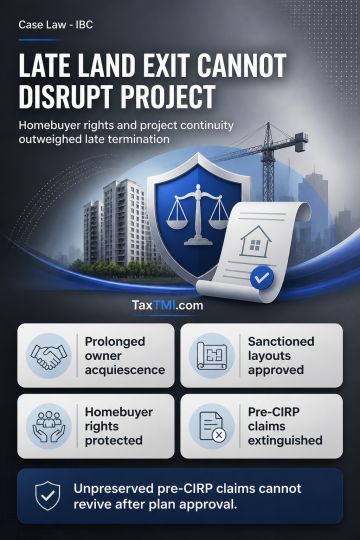
Acquiescence, homebuyer protection and clean-slate resolution principles prevent landowners from disrupting an integrated project through late termina...
The court held that the show cause notice (SCN) issued u/s 74 of the Central Goods and Services Tax Act, 2017 to a deceased sole proprietor is non-est in law. A sole proprietorship concern's identity is not distinct from the sole proprietor. Since the sole proprietor, Mr. Surender Kumar Gupta of M/s S.K. Gupta & Co., has expired, the SCN was issued to a non-existent person. While the legal representative or any person carrying on the deceased taxpayer's business is liable to pay the dues, the SCN should have been issued to them, not the deceased taxpayer. Relying on the Madras High Court's decision in Unnikrishnan R case, the court set aside the impugned SCN but clarified that the respondents can issue a notice to the legal representative or any other person carrying on the deceased taxpayer's business.
The court held that the show cause notice (SCN) issued u/s 74 of the Central Goods and Services Tax Act, 2017 to a deceased sole proprietor is non-est in law. A sole proprietorship concern's identity is not distinct from the sole proprietor. Since the sole proprietor, Mr. Surender Kumar Gupta of M/s S.K. Gupta & Co., has expired, the SCN was issued to a non-existent person. While the legal representative or any person carrying on the deceased taxpayer's business is liable to pay the dues, the SCN should have been issued to them, not the deceased taxpayer. Relying on the Madras High Court's decision in Unnikrishnan R case, the court set aside the impugned SCN but clarified that the respondents can issue a notice to the legal representative or any other person carrying on the deceased taxpayer's business.
Note: It is a system-generated summary and is for quick reference only.
 TaxTMI
  TaxTMI
 of 4811












 Join Channel


