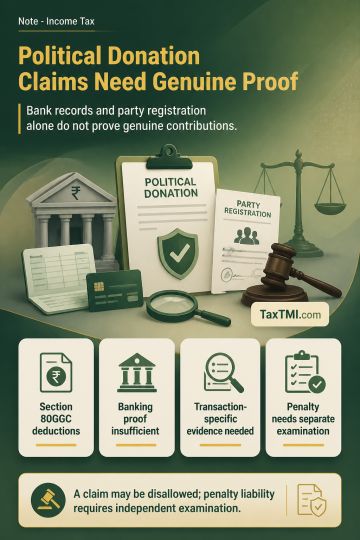
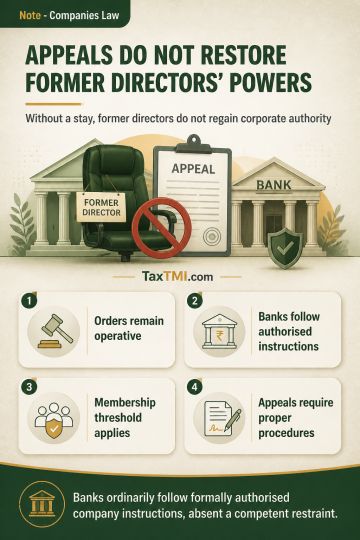
Political contribution deductions require genuine transactions; banking records and party registration alone cannot defeat evidence of accommodation e...
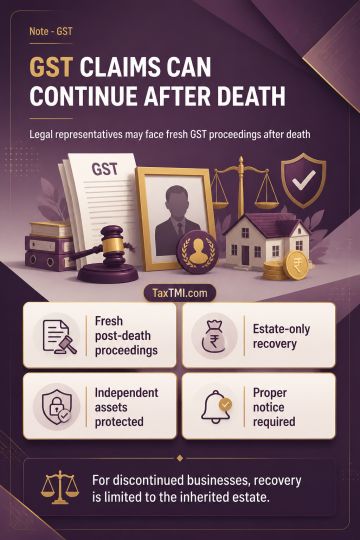
Post-death GST liability permits fresh proceedings against legal representatives, while discontinued-business recovery remains limited to the inherite...
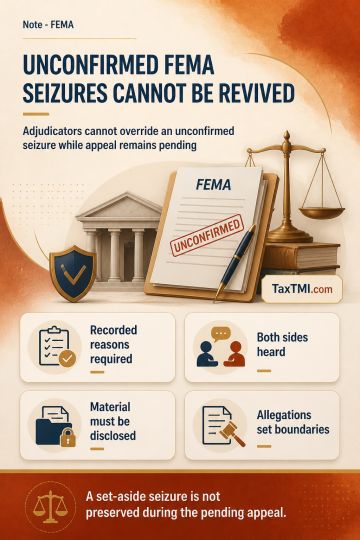
Non-confirmation of FEMA seizure prevents adjudicators from overriding pending appellate findings on recorded reasons and suspected foreign asset hold...
The court held that the show cause notice (SCN) issued u/s 74 of the Central Goods and Services Tax Act, 2017 to a deceased sole proprietor is non-est in law. A sole proprietorship concern's identity is not distinct from the sole proprietor. Since the sole proprietor, Mr. Surender Kumar Gupta of M/s S.K. Gupta & Co., has expired, the SCN was issued to a non-existent person. While the legal representative or any person carrying on the deceased taxpayer's business is liable to pay the dues, the SCN should have been issued to them, not the deceased taxpayer. Relying on the Madras High Court's decision in Unnikrishnan R case, the court set aside the impugned SCN but clarified that the respondents can issue a notice to the legal representative or any other person carrying on the deceased taxpayer's business.
The court held that the show cause notice (SCN) issued u/s 74 of the Central Goods and Services Tax Act, 2017 to a deceased sole proprietor is non-est in law. A sole proprietorship concern's identity is not distinct from the sole proprietor. Since the sole proprietor, Mr. Surender Kumar Gupta of M/s S.K. Gupta & Co., has expired, the SCN was issued to a non-existent person. While the legal representative or any person carrying on the deceased taxpayer's business is liable to pay the dues, the SCN should have been issued to them, not the deceased taxpayer. Relying on the Madras High Court's decision in Unnikrishnan R case, the court set aside the impugned SCN but clarified that the respondents can issue a notice to the legal representative or any other person carrying on the deceased taxpayer's business.
Note: It is a system-generated summary and is for quick reference only.
 TaxTMI
  TaxTMI