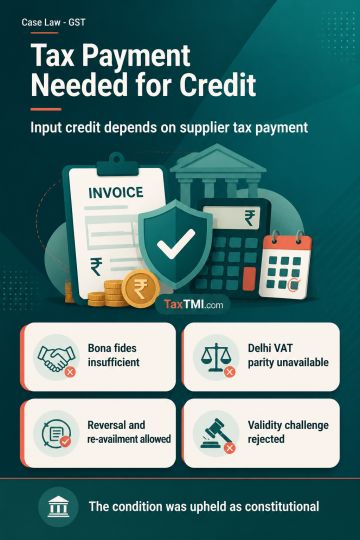
Input tax credit conditions remain constitutionally valid, with eligible recipient claims considered under GST circulars and retrospective filing dead...
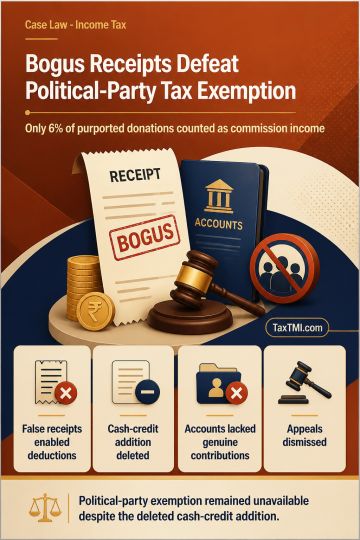
Bogus donation receipts justified commission income assessment and defeated political-party tax exemption for inaccurate accounts and reporting failur...
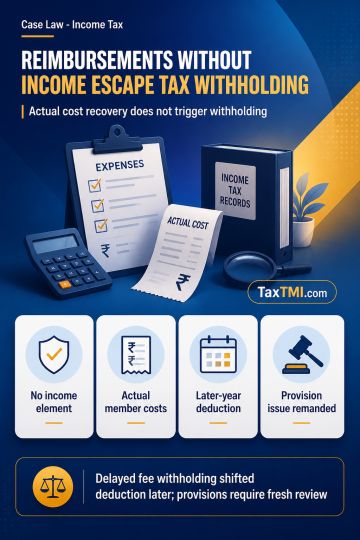
Pure reimbursement without income element escapes tax withholding, while delayed withholding and unsupported provisions face deferred or renewed scrut...
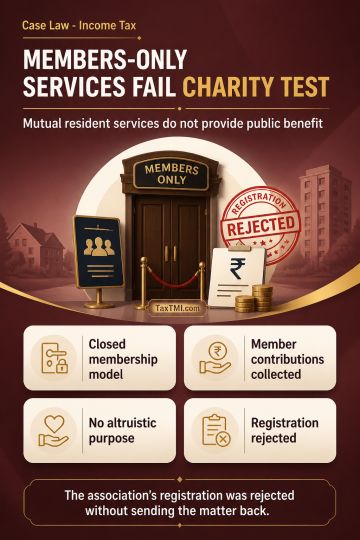
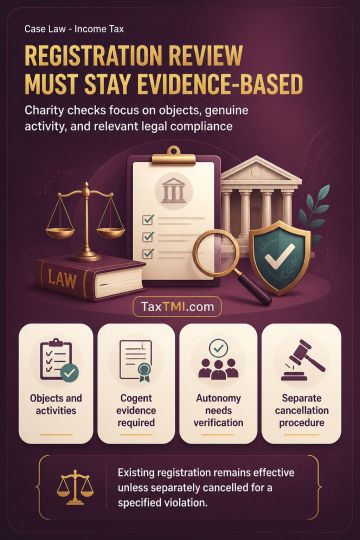
Public benefit requirement defeats charitable registration where residents' association services are reciprocal, member-only facilities governed by mu...
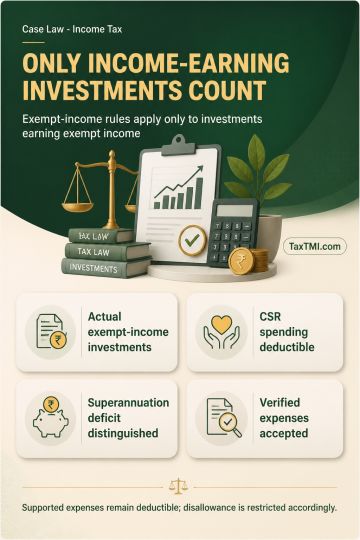
Exempt-income expenditure disallowance is confined to investments that actually generated exempt income, while supported business expenses remain dedu...
The court held that the show cause notice (SCN) issued u/s 74 of the Central Goods and Services Tax Act, 2017 to a deceased sole proprietor is non-est in law. A sole proprietorship concern's identity is not distinct from the sole proprietor. Since the sole proprietor, Mr. Surender Kumar Gupta of M/s S.K. Gupta & Co., has expired, the SCN was issued to a non-existent person. While the legal representative or any person carrying on the deceased taxpayer's business is liable to pay the dues, the SCN should have been issued to them, not the deceased taxpayer. Relying on the Madras High Court's decision in Unnikrishnan R case, the court set aside the impugned SCN but clarified that the respondents can issue a notice to the legal representative or any other person carrying on the deceased taxpayer's business.
The court held that the show cause notice (SCN) issued u/s 74 of the Central Goods and Services Tax Act, 2017 to a deceased sole proprietor is non-est in law. A sole proprietorship concern's identity is not distinct from the sole proprietor. Since the sole proprietor, Mr. Surender Kumar Gupta of M/s S.K. Gupta & Co., has expired, the SCN was issued to a non-existent person. While the legal representative or any person carrying on the deceased taxpayer's business is liable to pay the dues, the SCN should have been issued to them, not the deceased taxpayer. Relying on the Madras High Court's decision in Unnikrishnan R case, the court set aside the impugned SCN but clarified that the respondents can issue a notice to the legal representative or any other person carrying on the deceased taxpayer's business.
Note: It is a system-generated summary and is for quick reference only.
 TaxTMI
 of 4807



 Join Channel


 TaxTMI