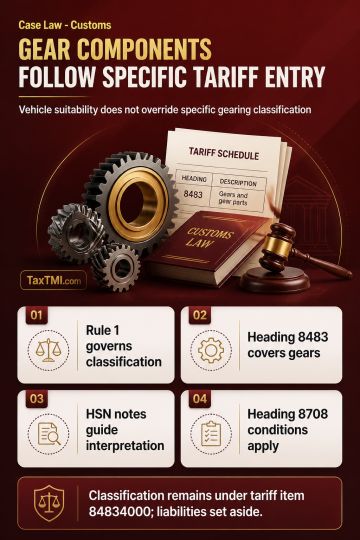
Tariff classification of vehicle gear components follows the specific gearing entry, displacing motor-vehicle parts classification and related liabili...
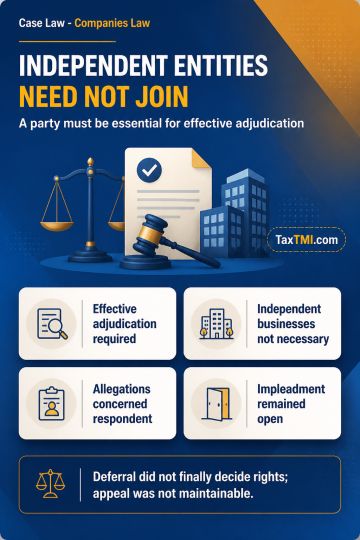
Necessary-party requirements limit impleadment of independent entities, while deferred consideration does not create an appealable adverse determinati...
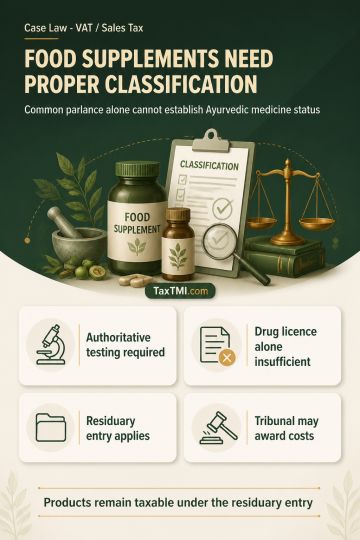
Food supplement classification requires common parlance and authoritative tests, preventing treatment as proprietary Ayurvedic medicines without suppo...
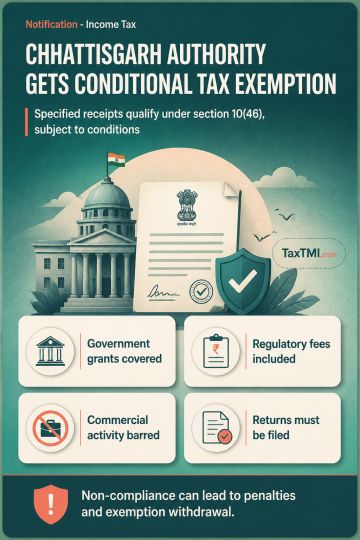
Specified regulatory authority income receives conditional tax exemption, subject to non-commercial activity, unchanged income character, and return f...
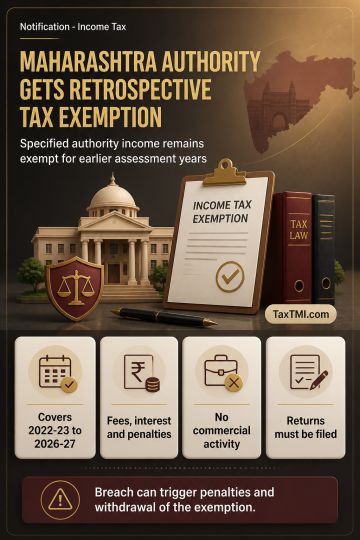
Tax exemption for regulatory authority income applies retrospectively, subject to non-commercial activity, unchanged income sources, and return-filing...
The court held that the show cause notice (SCN) issued u/s 74 of the Central Goods and Services Tax Act, 2017 to a deceased sole proprietor is non-est in law. A sole proprietorship concern's identity is not distinct from the sole proprietor. Since the sole proprietor, Mr. Surender Kumar Gupta of M/s S.K. Gupta & Co., has expired, the SCN was issued to a non-existent person. While the legal representative or any person carrying on the deceased taxpayer's business is liable to pay the dues, the SCN should have been issued to them, not the deceased taxpayer. Relying on the Madras High Court's decision in Unnikrishnan R case, the court set aside the impugned SCN but clarified that the respondents can issue a notice to the legal representative or any other person carrying on the deceased taxpayer's business.
The court held that the show cause notice (SCN) issued u/s 74 of the Central Goods and Services Tax Act, 2017 to a deceased sole proprietor is non-est in law. A sole proprietorship concern's identity is not distinct from the sole proprietor. Since the sole proprietor, Mr. Surender Kumar Gupta of M/s S.K. Gupta & Co., has expired, the SCN was issued to a non-existent person. While the legal representative or any person carrying on the deceased taxpayer's business is liable to pay the dues, the SCN should have been issued to them, not the deceased taxpayer. Relying on the Madras High Court's decision in Unnikrishnan R case, the court set aside the impugned SCN but clarified that the respondents can issue a notice to the legal representative or any other person carrying on the deceased taxpayer's business.
Note: It is a system-generated summary and is for quick reference only.
 TaxTMI
 of 4807







 Join Channel


 TaxTMI
