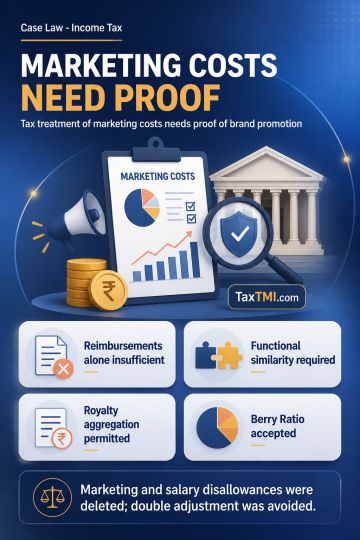
Transfer pricing requires evidence for AMP transactions, functionally reliable comparables, and appropriate aggregation or Berry Ratio benchmarking me...
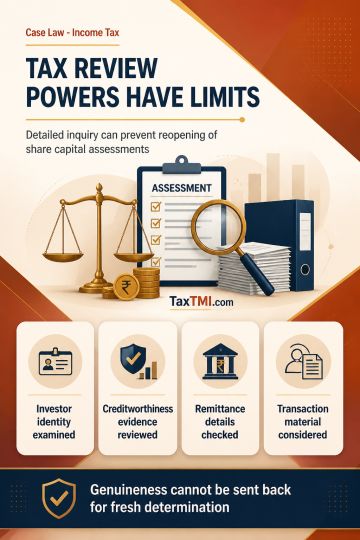
Revisionary jurisdiction cannot reopen share capital assessments where adequate inquiry supports a permissible view and no independent error is establ...
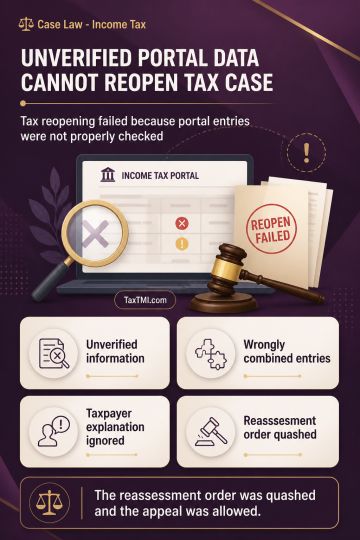
Reassessment jurisdiction fails where unverified portal information is aggregated without examining the taxpayer's explanation or relevance of entries...
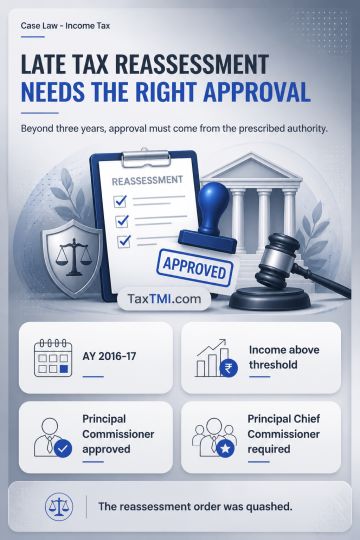
Statutory sanction for delayed reassessment requires approval from the prescribed authority; approval by an inferior authority invalidates jurisdictio...
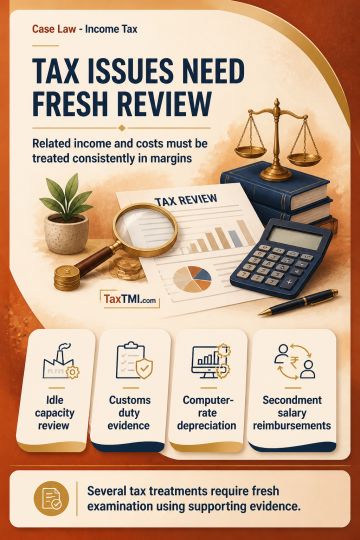
Transfer pricing margin adjustments require matching treatment of non-operating income and related costs, with comparability issues reconsidered on ev...
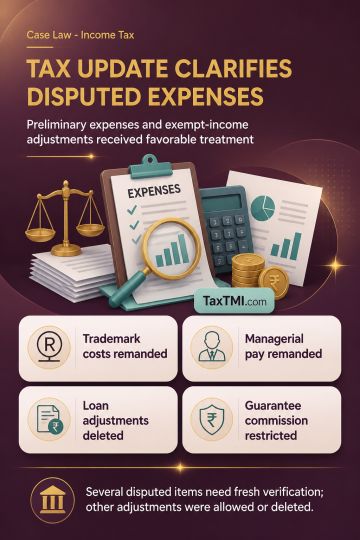
Preliminary-expense amortisation and MAT exempt-income adjustments prevailed, while trademark costs and managerial remuneration require fresh verifica...
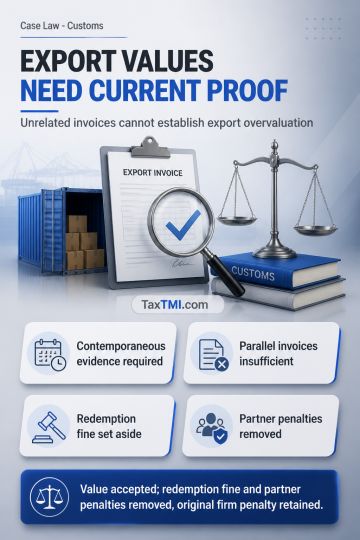
Export valuation requires contemporaneous evidence; unrelated invoices cannot prove overvaluation, and dual penalties on firm and partner are impermis...
The petitioners' rebate claim for export of goods was rejected and penalty imposed u/s 11AC of the Central Excise Act, 1944 read with Rules 25 and 27 of the Central Excise Rules, 2002. During investigation, it was found that the petitioners and co-noticees filed rebate claims with forged documents like shipping bills and Form ARE-I, which is mandatory for claiming rebate. The petitioners did not comply with the prescribed procedure and committed fraud by forging the Forms. The authorities rightly rejected the rebate claim. Regarding the limitation for issuance of the show-cause notice, although the period is five years from the date of knowledge u/s 11A, the authorities issued the notice in 2014 after obtaining the original documents from the Court of Sessions in 2014, which were earlier unavailable. The petitioners did not raise the limitation issue before the Adjudicating Authority, but raised it before the Revisional Authority and the High Court. As the limitation is a mixed question of fact and law, the High Court dealt with it. No interference was warranted in the orders rejecting the rebate claim and levying penalty on the petitioners under Article 227 of the Constitution, and the petitions were dismissed.
The petitioners' rebate claim for export of goods was rejected and penalty imposed u/s 11AC of the Central Excise Act, 1944 read with Rules 25 and 27 of the Central Excise Rules, 2002. During investigation, it was found that the petitioners and co-noticees filed rebate claims with forged documents like shipping bills and Form ARE-I, which is mandatory for claiming rebate. The petitioners did not comply with the prescribed procedure and committed fraud by forging the Forms. The authorities rightly rejected the rebate claim. Regarding the limitation for issuance of the show-cause notice, although the period is five years from the date of knowledge u/s 11A, the authorities issued the notice in 2014 after obtaining the original documents from the Court of Sessions in 2014, which were earlier unavailable. The petitioners did not raise the limitation issue before the Adjudicating Authority, but raised it before the Revisional Authority and the High Court. As the limitation is a mixed question of fact and law, the High Court dealt with it. No interference was warranted in the orders rejecting the rebate claim and levying penalty on the petitioners under Article 227 of the Constitution, and the petitions were dismissed.
Note: It is a system-generated summary and is for quick reference only.
 TaxTMI
 of 4801




 Join Channel


 TaxTMI
