Pre-existing operational debt disputes require genuine evidence, while undirected running-account payments may be appropriated on a first-in-first-out...
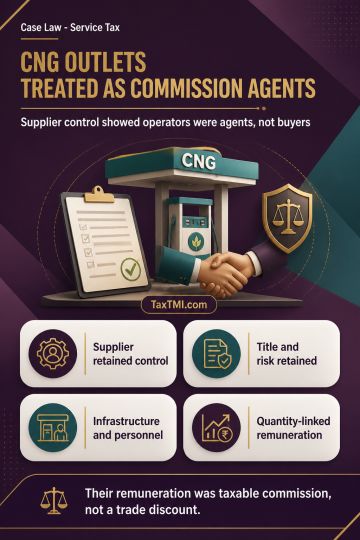
Agency in CNG distribution makes outlet operators commission agents, rendering taxable Business Auxiliary Service rather than purchasing goods for res...
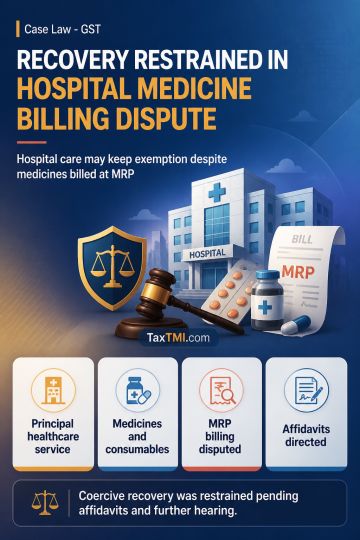
Composite inpatient healthcare supply may retain exemption despite MRP medicine billing, while separate taxable sale characterisation remains disputed...
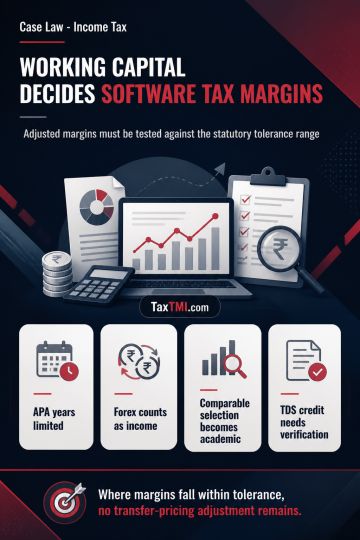
Working-capital adjustment determines whether software-services transfer-pricing margins fall within the statutory tolerance range, eliminating any ad...
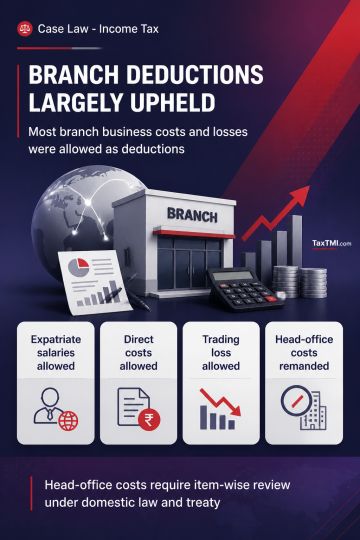
Permanent establishment deductions upheld for expatriate salaries, direct costs and trading losses, while head-office costs require fresh classificati...
Page of 4807
Press 'Enter' after typing page number.
1101 to 1120 of 96136 Results
❮
❯
❯❯
0 / 200
Expand Note
Add to Folder
No Folders have been created
+
Are you sure you want to delete "My most important" ?
The appellant manufactured polyester staple fiber (PSF) using PET bottles scrap (90%) and popcorn waste (less than 10%). The department denied the nil/concessional duty benefit under relevant notifications, alleging popcorn is not plastic waste and the appellant suppressed facts. The Tribunal held that in the absence of words like 'only', 'exclusively' in the notifications, the benefit cannot be denied merely for using a small quantity of popcorn waste along with PET bottles scrap. Popcorn being manufactured from plastic waste/scrap, cannot be excluded from the notifications' scope. Regarding extended period of limitation, the Tribunal held that mere non-disclosure is not suppression unless deliberate to evade duty. The appellant disclosed using popcorn in statements/returns, hence no suppression. The department failed to establish the appellant deliberately suppressed facts to evade duty, thus extended period was wrongly invoked. The Tribunal set aside the impugned order, allowing the appeals. The penalty on the Director was also questioned as the department failed to prove the Director dealt with confiscatable goods knowingly.
The appellant manufactured polyester staple fiber (PSF) using PET bottles scrap (90%) and popcorn waste (less than 10%). The department denied the nil/concessional duty benefit under relevant notifications, alleging popcorn is not plastic waste and the appellant suppressed facts. The Tribunal held that in the absence of words like 'only', 'exclusively' in the notifications, the benefit cannot be denied merely for using a small quantity of popcorn waste along with PET bottles scrap. Popcorn being manufactured from plastic waste/scrap, cannot be excluded from the notifications' scope. Regarding extended period of limitation, the Tribunal held that mere non-disclosure is not suppression unless deliberate to evade duty. The appellant disclosed using popcorn in statements/returns, hence no suppression. The department failed to establish the appellant deliberately suppressed facts to evade duty, thus extended period was wrongly invoked. The Tribunal set aside the impugned order, allowing the appeals. The penalty on the Director was also questioned as the department failed to prove the Director dealt with confiscatable goods knowingly.
Note: It is a system-generated summary and is for quick reference only.
 TaxTMI
 of 4807








 Join Channel


 TaxTMI