Specified regulatory authority income receives conditional tax exemption, subject to non-commercial activity, unchanged income character, and return f...
Tax exemption for regulatory authority income applies retrospectively, subject to non-commercial activity, unchanged income sources, and return-filing...
Input tax credit conditions remain constitutionally valid, with eligible recipient claims considered under GST circulars and retrospective filing dead...
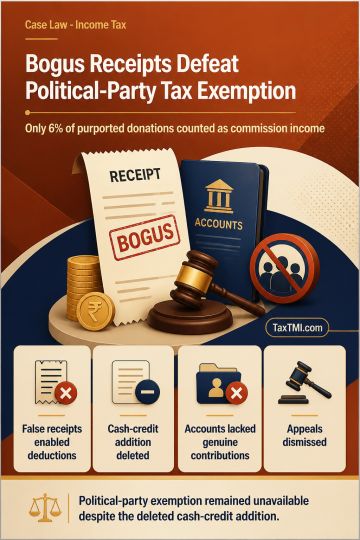
Bogus donation receipts justified commission income assessment and defeated political-party tax exemption for inaccurate accounts and reporting failur...
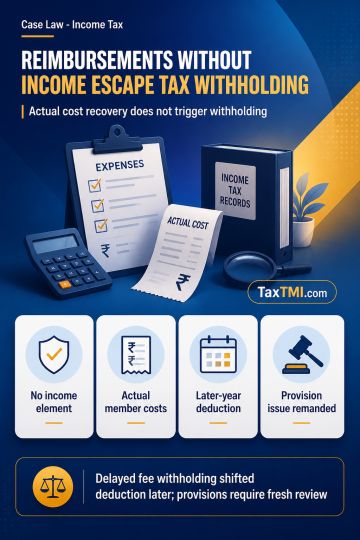
Pure reimbursement without income element escapes tax withholding, while delayed withholding and unsupported provisions face deferred or renewed scrut...
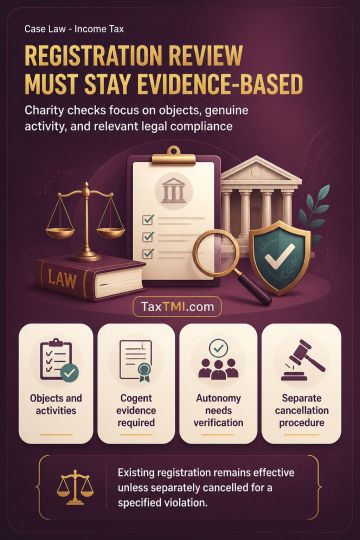
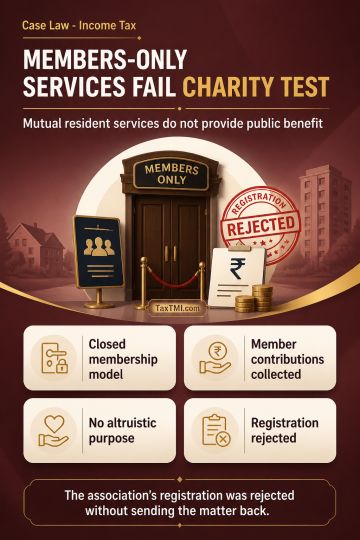
Public benefit requirement defeats charitable registration where residents' association services are reciprocal, member-only facilities governed by mu...
The appellant manufactured polyester staple fiber (PSF) using PET bottles scrap (90%) and popcorn waste (less than 10%). The department denied the nil/concessional duty benefit under relevant notifications, alleging popcorn is not plastic waste and the appellant suppressed facts. The Tribunal held that in the absence of words like 'only', 'exclusively' in the notifications, the benefit cannot be denied merely for using a small quantity of popcorn waste along with PET bottles scrap. Popcorn being manufactured from plastic waste/scrap, cannot be excluded from the notifications' scope. Regarding extended period of limitation, the Tribunal held that mere non-disclosure is not suppression unless deliberate to evade duty. The appellant disclosed using popcorn in statements/returns, hence no suppression. The department failed to establish the appellant deliberately suppressed facts to evade duty, thus extended period was wrongly invoked. The Tribunal set aside the impugned order, allowing the appeals. The penalty on the Director was also questioned as the department failed to prove the Director dealt with confiscatable goods knowingly.
The appellant manufactured polyester staple fiber (PSF) using PET bottles scrap (90%) and popcorn waste (less than 10%). The department denied the nil/concessional duty benefit under relevant notifications, alleging popcorn is not plastic waste and the appellant suppressed facts. The Tribunal held that in the absence of words like 'only', 'exclusively' in the notifications, the benefit cannot be denied merely for using a small quantity of popcorn waste along with PET bottles scrap. Popcorn being manufactured from plastic waste/scrap, cannot be excluded from the notifications' scope. Regarding extended period of limitation, the Tribunal held that mere non-disclosure is not suppression unless deliberate to evade duty. The appellant disclosed using popcorn in statements/returns, hence no suppression. The department failed to establish the appellant deliberately suppressed facts to evade duty, thus extended period was wrongly invoked. The Tribunal set aside the impugned order, allowing the appeals. The penalty on the Director was also questioned as the department failed to prove the Director dealt with confiscatable goods knowingly.
Note: It is a system-generated summary and is for quick reference only.
 TaxTMI
 of 4805










 Join Channel


 TaxTMI