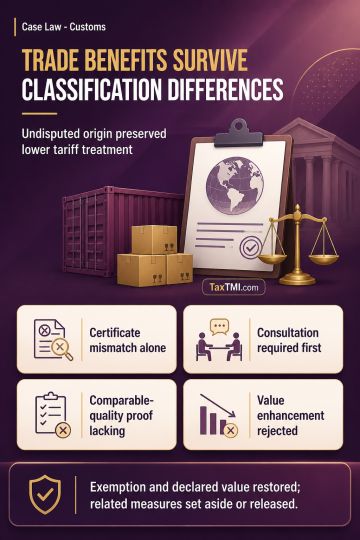
Revenue neutrality in domestic related-party loans can require deletion of interest transfer pricing adjustments after domestic-transaction verificati...
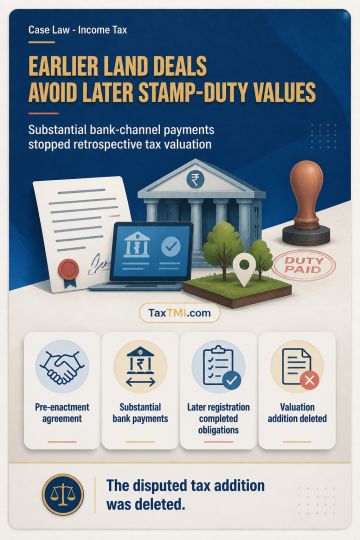
Pre-enactment land-sale agreements escape stamp-duty value substitution where substantial banking-channel consideration was received before Section 43...
The appellant manufactured polyester staple fiber (PSF) using PET bottles scrap (90%) and popcorn waste (less than 10%). The department denied the nil/concessional duty benefit under relevant notifications, alleging popcorn is not plastic waste and the appellant suppressed facts. The Tribunal held that in the absence of words like 'only', 'exclusively' in the notifications, the benefit cannot be denied merely for using a small quantity of popcorn waste along with PET bottles scrap. Popcorn being manufactured from plastic waste/scrap, cannot be excluded from the notifications' scope. Regarding extended period of limitation, the Tribunal held that mere non-disclosure is not suppression unless deliberate to evade duty. The appellant disclosed using popcorn in statements/returns, hence no suppression. The department failed to establish the appellant deliberately suppressed facts to evade duty, thus extended period was wrongly invoked. The Tribunal set aside the impugned order, allowing the appeals. The penalty on the Director was also questioned as the department failed to prove the Director dealt with confiscatable goods knowingly.
The appellant manufactured polyester staple fiber (PSF) using PET bottles scrap (90%) and popcorn waste (less than 10%). The department denied the nil/concessional duty benefit under relevant notifications, alleging popcorn is not plastic waste and the appellant suppressed facts. The Tribunal held that in the absence of words like 'only', 'exclusively' in the notifications, the benefit cannot be denied merely for using a small quantity of popcorn waste along with PET bottles scrap. Popcorn being manufactured from plastic waste/scrap, cannot be excluded from the notifications' scope. Regarding extended period of limitation, the Tribunal held that mere non-disclosure is not suppression unless deliberate to evade duty. The appellant disclosed using popcorn in statements/returns, hence no suppression. The department failed to establish the appellant deliberately suppressed facts to evade duty, thus extended period was wrongly invoked. The Tribunal set aside the impugned order, allowing the appeals. The penalty on the Director was also questioned as the department failed to prove the Director dealt with confiscatable goods knowingly.
Note: It is a system-generated summary and is for quick reference only.
 TaxTMI
 of 4801













 Join Channel


 TaxTMI