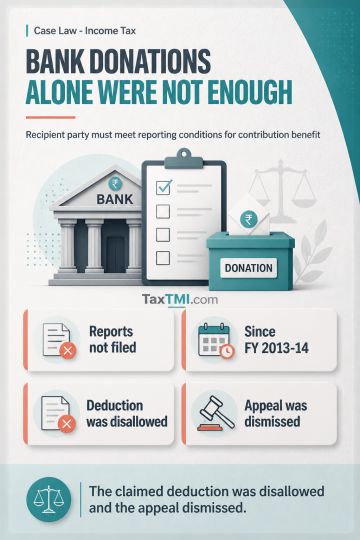
Political contribution deductions require recipient party compliance with contribution-reporting conditions; banking-channel donations alone do not qu...
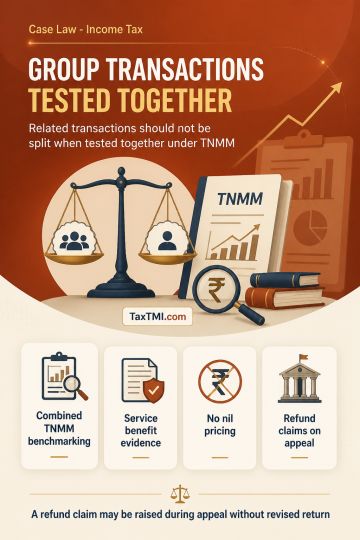
Aggregation under TNMM prevents selective testing of intra-group services without comparable uncontrolled transactions, while appellate additional cla...
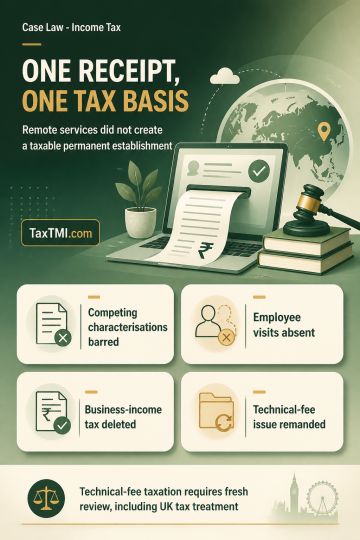
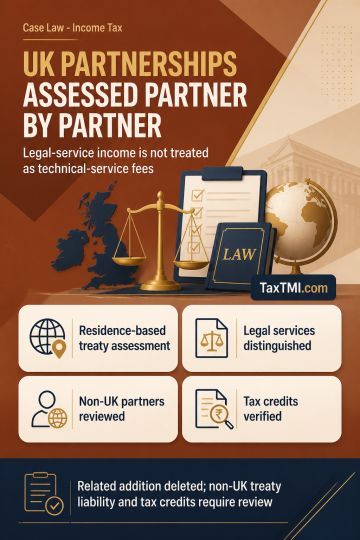
Protective assessment cannot duplicate identical receipts under competing characterisations; remote services did not establish a taxable permanent est...
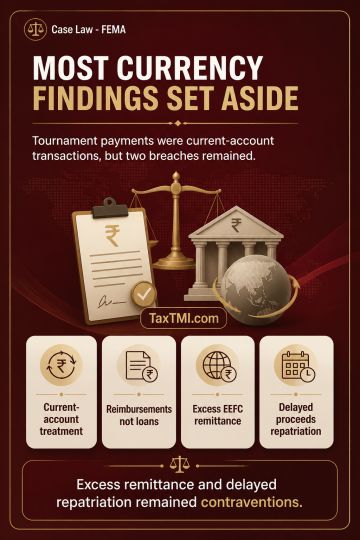
Current account treatment of overseas tournament services removed most FEMA findings, but excess EEFC remittance and delayed repatriation remained bre...
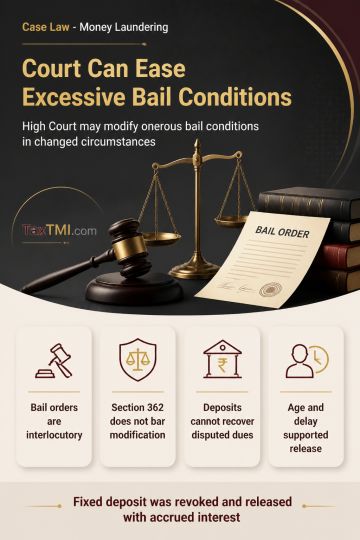
Modification of bail conditions remains available through inherent jurisdiction where onerous deposits undermine justice and cannot recover disputed d...
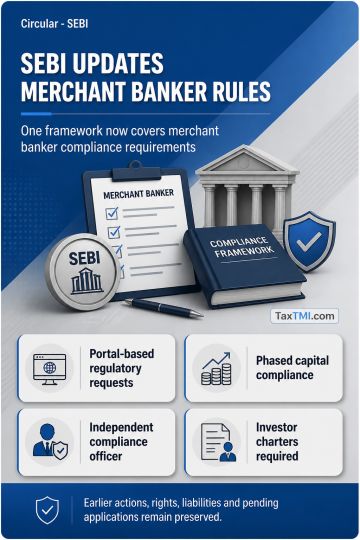
Merchant banker regulation consolidates registration, governance, capital, reporting, outsourcing and investor-protection requirements under an update...
The petitioner's application for GST refund, filed on 08.09.2020, was within the two-year limitation period prescribed u/s 54 of the CGST Act, 2017. The respondents initially treated this application as timely but later rejected a subsequent application dated 28.03.2020 as time-barred, despite it being a continuation of the original timely filed application. The respondents failed to justify their contradictory stance and provide cogent reasons for rejecting the claim. Their evasive objections and failure to address the original timely filed application led the Court to draw an adverse inference. Consequently, the deficiency memo issued by the Assistant Commissioner rejecting the refund claim was quashed, and the petition was allowed.
The petitioner's application for GST refund, filed on 08.09.2020, was within the two-year limitation period prescribed u/s 54 of the CGST Act, 2017. The respondents initially treated this application as timely but later rejected a subsequent application dated 28.03.2020 as time-barred, despite it being a continuation of the original timely filed application. The respondents failed to justify their contradictory stance and provide cogent reasons for rejecting the claim. Their evasive objections and failure to address the original timely filed application led the Court to draw an adverse inference. Consequently, the deficiency memo issued by the Assistant Commissioner rejecting the refund claim was quashed, and the petition was allowed.
Note: It is a system-generated summary and is for quick reference only.
 TaxTMI
 of 4782






 Join Channel


 TaxTMI