Specialized Investment Fund distribution now requires dedicated certification, while transitional recognition preserves existing qualified distributor...
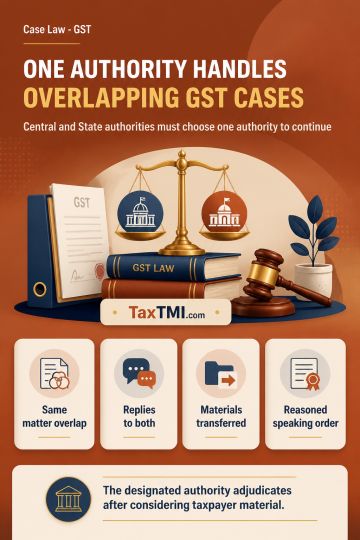
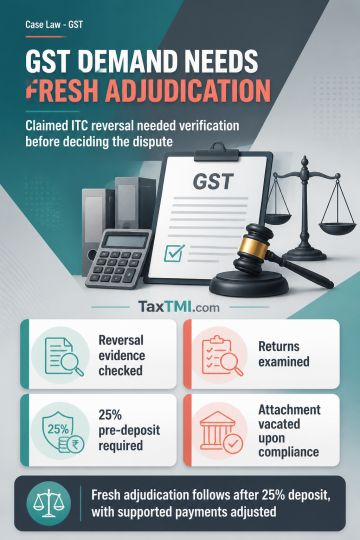
Overlapping GST proceedings require Central and State authorities to designate one competent authority for coordinated adjudication of the same matter...
Page of 4787
Press 'Enter' after typing page number.
641 to 660 of 95724 Results
❮
❯
❯❯
0 / 200
Expand Note
Add to Folder
No Folders have been created
+
Are you sure you want to delete "My most important" ?
Taxability of receipts as 'fees for included services' under the India-USA Double Taxation Avoidance Agreement (DTAA). The key points are: The Assessing Officer (AO) treated the remittances received by the assessee company from its sister concerns for providing IT support, maintenance services, etc., as 'fees for included services' (FIS) u/s 9(1)(vii)(b) of the Income Tax Act and taxed the same u/s 115A. However, the assessee argued that merely providing complicated services with a nexus to the compensation received does not constitute FIS under the DTAA unless it satisfies the definition of FIS, which involves making available technical knowledge, expertise, skills, know-how, or processes. The Appellate Tribunal agreed with the assessee's argument, stating that for a payment to be considered FIS under Article 12 of the India-US DTAA, the technical knowledge, skills, etc., must remain with the recipient even after the contract ends. The services provided by the assessee, such as centralizing IT services, providing disaster recovery, helpdesk support, and user administration, do not make available any technical knowledge or skills to the recipient. Hence, the receipts cannot be considered FIS under the DTAA and are not taxable in India. The Tribunal also.
Taxability of receipts as 'fees for included services' under the India-USA Double Taxation Avoidance Agreement (DTAA). The key points are: The Assessing Officer (AO) treated the remittances received by the assessee company from its sister concerns for providing IT support, maintenance services, etc., as 'fees for included services' (FIS) u/s 9(1)(vii)(b) of the Income Tax Act and taxed the same u/s 115A. However, the assessee argued that merely providing complicated services with a nexus to the compensation received does not constitute FIS under the DTAA unless it satisfies the definition of FIS, which involves making available technical knowledge, expertise, skills, know-how, or processes. The Appellate Tribunal agreed with the assessee's argument, stating that for a payment to be considered FIS under Article 12 of the India-US DTAA, the technical knowledge, skills, etc., must remain with the recipient even after the contract ends. The services provided by the assessee, such as centralizing IT services, providing disaster recovery, helpdesk support, and user administration, do not make available any technical knowledge or skills to the recipient. Hence, the receipts cannot be considered FIS under the DTAA and are not taxable in India. The Tribunal also.
Note: It is a system-generated summary and is for quick reference only.
 TaxTMI
 of 4787













 Join Channel


 TaxTMI