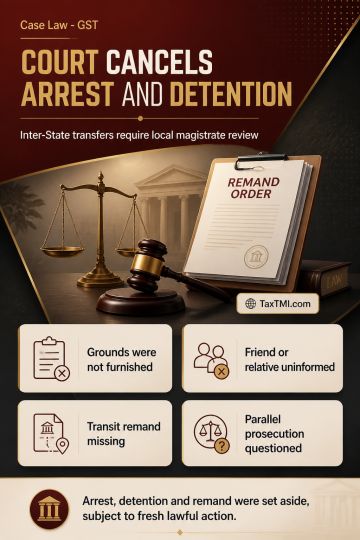
Arrest safeguards and transit remand requirements invalidated detention following inter-State transfer without communicated grounds or magistrate auth...
Arrest safeguards require disclosed grounds, relative intimation and transit remand, while duplicate prosecution under the CGST framework is unsustain...
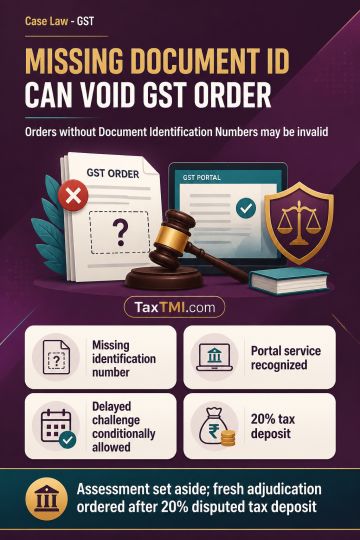
Document Identification Number defects can invalidate GST assessments, with delayed challenges entertained conditionally where patent irregularities e...
Windmill commissioning evidence supported higher depreciation where grid connection and electricity generation proved operational use before the relev...
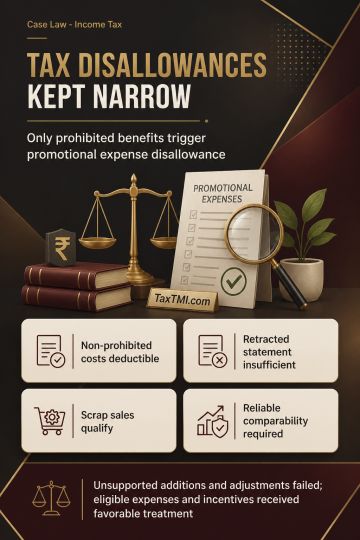
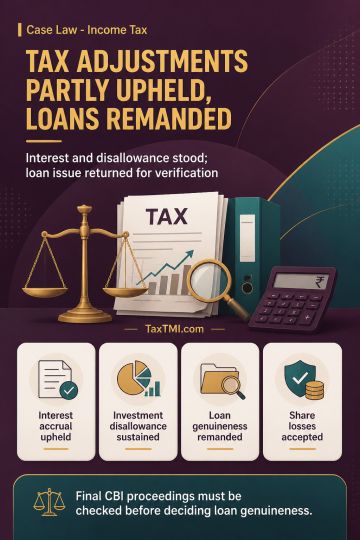
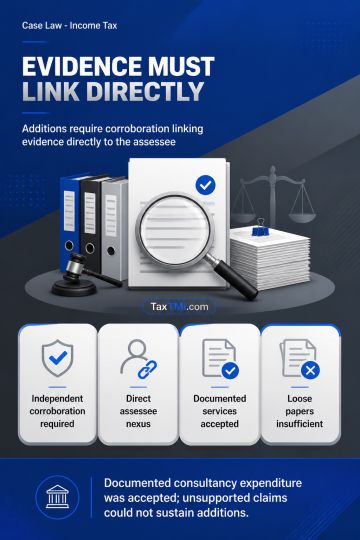
Pharmaceutical promotion and transfer-pricing comparability principles limited disallowances, while uncorroborated search allegations and unsupported ...
Business expenditure substantiation supports scrap credits, statutory payments and expense claims, while depreciation requires proof of actual busines...
Taxability of receipts as 'fees for included services' under the India-USA Double Taxation Avoidance Agreement (DTAA). The key points are: The Assessing Officer (AO) treated the remittances received by the assessee company from its sister concerns for providing IT support, maintenance services, etc., as 'fees for included services' (FIS) u/s 9(1)(vii)(b) of the Income Tax Act and taxed the same u/s 115A. However, the assessee argued that merely providing complicated services with a nexus to the compensation received does not constitute FIS under the DTAA unless it satisfies the definition of FIS, which involves making available technical knowledge, expertise, skills, know-how, or processes. The Appellate Tribunal agreed with the assessee's argument, stating that for a payment to be considered FIS under Article 12 of the India-US DTAA, the technical knowledge, skills, etc., must remain with the recipient even after the contract ends. The services provided by the assessee, such as centralizing IT services, providing disaster recovery, helpdesk support, and user administration, do not make available any technical knowledge or skills to the recipient. Hence, the receipts cannot be considered FIS under the DTAA and are not taxable in India. The Tribunal also.
Taxability of receipts as 'fees for included services' under the India-USA Double Taxation Avoidance Agreement (DTAA). The key points are: The Assessing Officer (AO) treated the remittances received by the assessee company from its sister concerns for providing IT support, maintenance services, etc., as 'fees for included services' (FIS) u/s 9(1)(vii)(b) of the Income Tax Act and taxed the same u/s 115A. However, the assessee argued that merely providing complicated services with a nexus to the compensation received does not constitute FIS under the DTAA unless it satisfies the definition of FIS, which involves making available technical knowledge, expertise, skills, know-how, or processes. The Appellate Tribunal agreed with the assessee's argument, stating that for a payment to be considered FIS under Article 12 of the India-US DTAA, the technical knowledge, skills, etc., must remain with the recipient even after the contract ends. The services provided by the assessee, such as centralizing IT services, providing disaster recovery, helpdesk support, and user administration, do not make available any technical knowledge or skills to the recipient. Hence, the receipts cannot be considered FIS under the DTAA and are not taxable in India. The Tribunal also.
Note: It is a system-generated summary and is for quick reference only.
 TaxTMI
 of 4784













 Join Channel


 TaxTMI