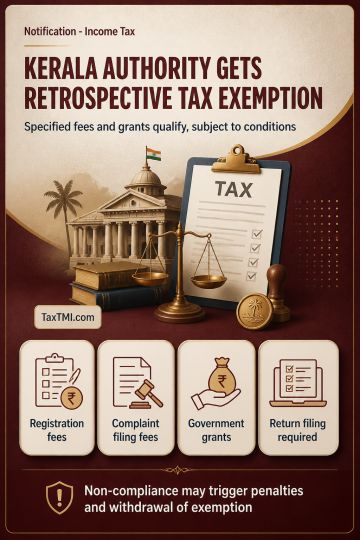
Tax exemption for regulatory authority income applies retrospectively, subject to non-commercial activity, unchanged income sources, and return filing...
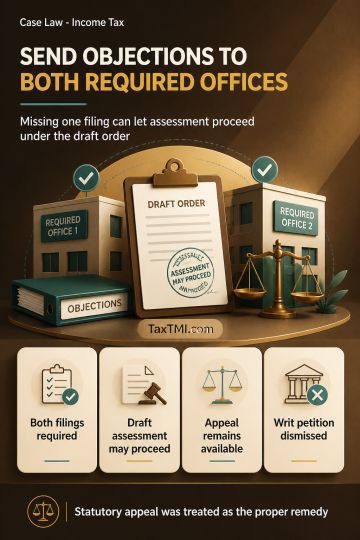
Dispute Resolution Panel objections must reach both prescribed forums; otherwise assessment may proceed and statutory appeal remains the proper remedy...
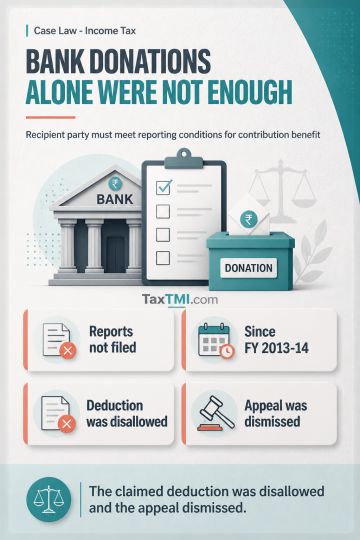
Political contribution deductions require recipient party compliance with contribution-reporting conditions; banking-channel donations alone do not qu...
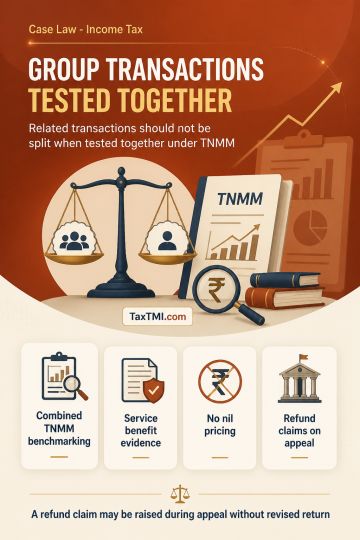
Aggregation under TNMM prevents selective testing of intra-group services without comparable uncontrolled transactions, while appellate additional cla...
Page of 4786
Press 'Enter' after typing page number.
341 to 360 of 95714 Results
❮
❯
❯❯
0 / 200
Expand Note
Add to Folder
No Folders have been created
+
Are you sure you want to delete "My most important" ?
The High Court ruled that the petitioner's entitlement to avail Input Tax Credit under the CENVAT Credit Rules, 2004 cannot be denied, as long as the credit was validly earned. The court relied on the Supreme Court's decision in Collector of Central Excise, Pune v. Dai Ichi Karkaria Ltd., which held that validly earned credit is indefeasible and cannot be reversed, except in cases of illegal or irregular credit. Regarding the procedural irregularity u/s 140 of the CGST Act, 2017, the court condoned it, citing the Supreme Court's decision in Commissioner of Sales Tax, UP v. Auraiya Chamber of Commerce, Allahabad, which held that procedures are aids to justice, not obstacles. Consequently, the impugned order was quashed, and the petition was allowed.
The High Court ruled that the petitioner's entitlement to avail Input Tax Credit under the CENVAT Credit Rules, 2004 cannot be denied, as long as the credit was validly earned. The court relied on the Supreme Court's decision in Collector of Central Excise, Pune v. Dai Ichi Karkaria Ltd., which held that validly earned credit is indefeasible and cannot be reversed, except in cases of illegal or irregular credit. Regarding the procedural irregularity u/s 140 of the CGST Act, 2017, the court condoned it, citing the Supreme Court's decision in Commissioner of Sales Tax, UP v. Auraiya Chamber of Commerce, Allahabad, which held that procedures are aids to justice, not obstacles. Consequently, the impugned order was quashed, and the petition was allowed.
Note: It is a system-generated summary and is for quick reference only.
 TaxTMI
 of 4786





 Join Channel


 TaxTMI