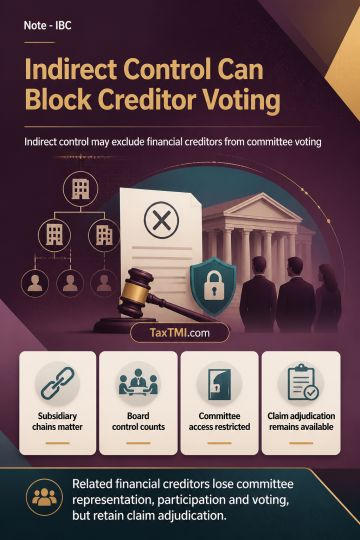
Indirect corporate control can create related-party status, excluding financial creditors from Committee of Creditors representation, participation an...
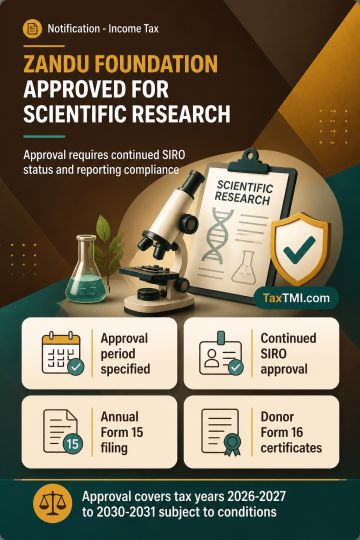
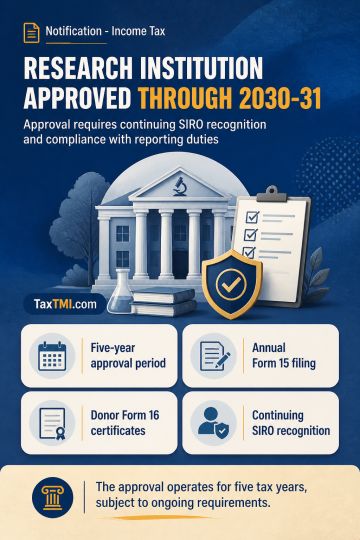
Scientific research association approval requires continuing SIRO status, annual donation reporting, and donor certificates for the approved foundatio...
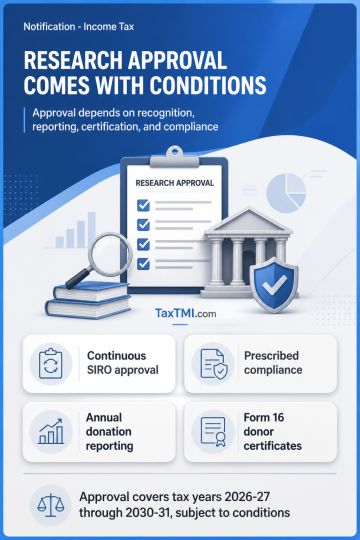
Scientific research institution approval is conditional on SIRO recognition, annual donation reporting, donor certification, and prescribed compliance...
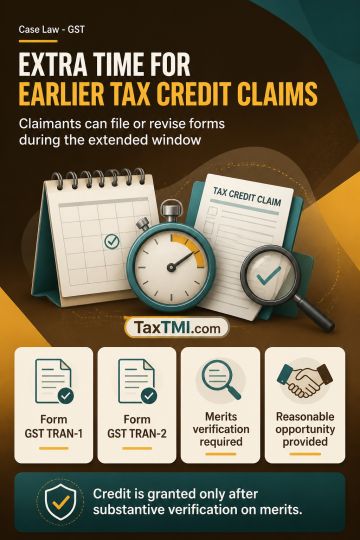
The High Court ruled that the petitioner's entitlement to avail Input Tax Credit under the CENVAT Credit Rules, 2004 cannot be denied, as long as the credit was validly earned. The court relied on the Supreme Court's decision in Collector of Central Excise, Pune v. Dai Ichi Karkaria Ltd., which held that validly earned credit is indefeasible and cannot be reversed, except in cases of illegal or irregular credit. Regarding the procedural irregularity u/s 140 of the CGST Act, 2017, the court condoned it, citing the Supreme Court's decision in Commissioner of Sales Tax, UP v. Auraiya Chamber of Commerce, Allahabad, which held that procedures are aids to justice, not obstacles. Consequently, the impugned order was quashed, and the petition was allowed.
The High Court ruled that the petitioner's entitlement to avail Input Tax Credit under the CENVAT Credit Rules, 2004 cannot be denied, as long as the credit was validly earned. The court relied on the Supreme Court's decision in Collector of Central Excise, Pune v. Dai Ichi Karkaria Ltd., which held that validly earned credit is indefeasible and cannot be reversed, except in cases of illegal or irregular credit. Regarding the procedural irregularity u/s 140 of the CGST Act, 2017, the court condoned it, citing the Supreme Court's decision in Commissioner of Sales Tax, UP v. Auraiya Chamber of Commerce, Allahabad, which held that procedures are aids to justice, not obstacles. Consequently, the impugned order was quashed, and the petition was allowed.
Note: It is a system-generated summary and is for quick reference only.
 TaxTMI
  TaxTMI