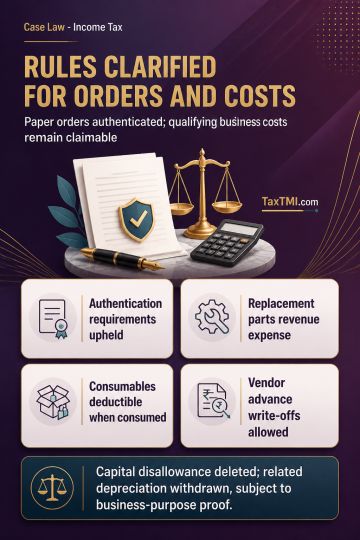
Authentication of paper assessment orders upheld, while qualifying repairs, consumables and vendor advance write-offs remain deductible business claim...
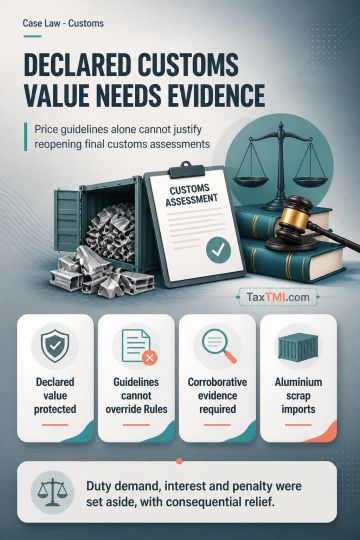
Transaction value cannot be rejected solely on non-statutory valuation guidelines without corroborative evidence supporting reassessment of final cust...
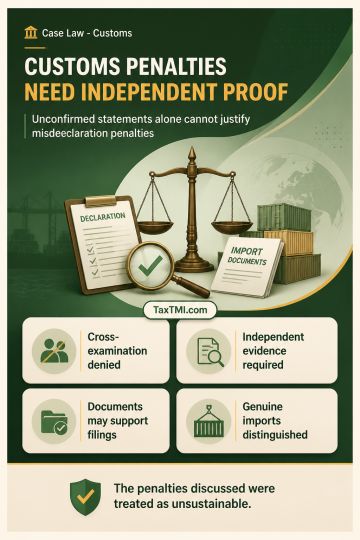
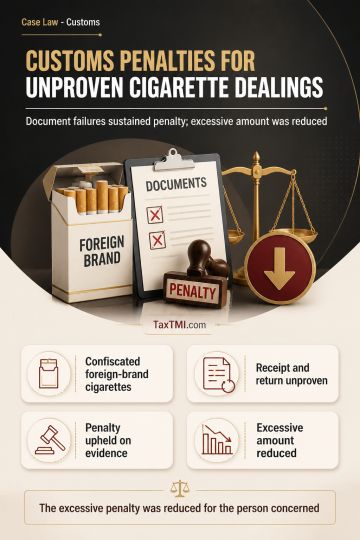
Cross-examination rights and corroborated evidence limit customs penalties for misdeclaration in genuine import transactions involving documented clea...
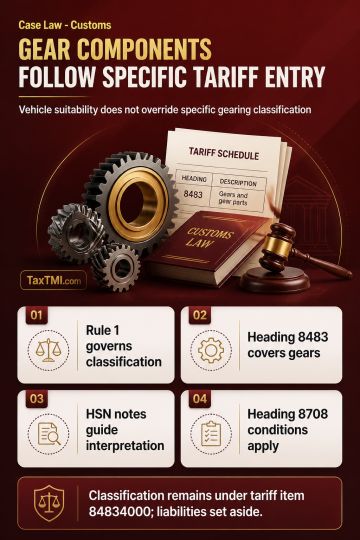
Tariff classification of vehicle gear components follows the specific gearing entry, displacing motor-vehicle parts classification and related liabili...
The High Court examined the issue of liability to clear statutory dues post-insolvency proceedings under the Insolvency and Bankruptcy Code 2016. The resolution plan approved by NCLT provided for payment of Rs. 25 crores towards clearing all statutory dues, including claims by government authorities. Referring to the Supreme Court's decision in Ghanshyam Mishra and Sons Pvt. Ltd. case, the High Court held that on the date of approval of the resolution plan, all claims not part of the plan stand extinguished. Consequently, the petitioner's liability arising under the AP VAT Act or GST Act stands extinguished to the extent of its liability up to the date of approval of the resolution plan. The contention that NCLT's order is not binding due to Section 88 of the GST Act was rejected, as Section 238 of the IBC provides for a non-obstante clause overriding other laws. The High Court allowed the petitions, setting aside the demand-cum-adjudication orders issued by the tax authorities.
The High Court examined the issue of liability to clear statutory dues post-insolvency proceedings under the Insolvency and Bankruptcy Code 2016. The resolution plan approved by NCLT provided for payment of Rs. 25 crores towards clearing all statutory dues, including claims by government authorities. Referring to the Supreme Court's decision in Ghanshyam Mishra and Sons Pvt. Ltd. case, the High Court held that on the date of approval of the resolution plan, all claims not part of the plan stand extinguished. Consequently, the petitioner's liability arising under the AP VAT Act or GST Act stands extinguished to the extent of its liability up to the date of approval of the resolution plan. The contention that NCLT's order is not binding due to Section 88 of the GST Act was rejected, as Section 238 of the IBC provides for a non-obstante clause overriding other laws. The High Court allowed the petitions, setting aside the demand-cum-adjudication orders issued by the tax authorities.
Note: It is a system-generated summary and is for quick reference only.
 TaxTMI
 of 4805




 Join Channel


 TaxTMI