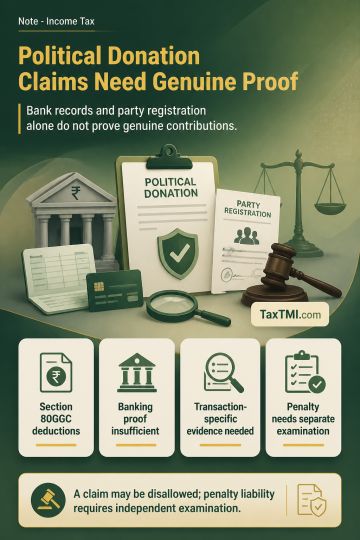
Political contribution deductions require genuine transactions; banking records and party registration alone cannot defeat evidence of accommodation e...
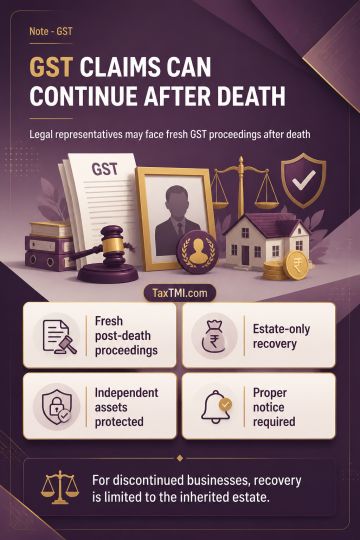
Post-death GST liability permits fresh proceedings against legal representatives, while discontinued-business recovery remains limited to the inherite...
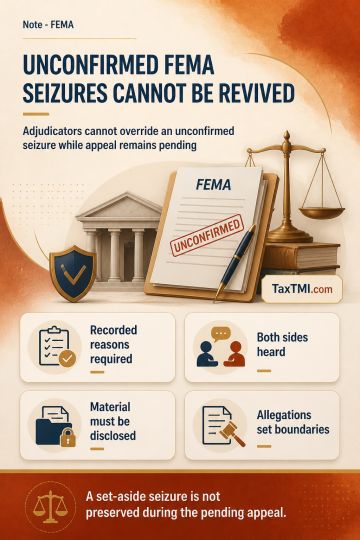
Non-confirmation of FEMA seizure prevents adjudicators from overriding pending appellate findings on recorded reasons and suspected foreign asset hold...
The High Court examined the issue of liability to clear statutory dues post-insolvency proceedings under the Insolvency and Bankruptcy Code 2016. The resolution plan approved by NCLT provided for payment of Rs. 25 crores towards clearing all statutory dues, including claims by government authorities. Referring to the Supreme Court's decision in Ghanshyam Mishra and Sons Pvt. Ltd. case, the High Court held that on the date of approval of the resolution plan, all claims not part of the plan stand extinguished. Consequently, the petitioner's liability arising under the AP VAT Act or GST Act stands extinguished to the extent of its liability up to the date of approval of the resolution plan. The contention that NCLT's order is not binding due to Section 88 of the GST Act was rejected, as Section 238 of the IBC provides for a non-obstante clause overriding other laws. The High Court allowed the petitions, setting aside the demand-cum-adjudication orders issued by the tax authorities.
The High Court examined the issue of liability to clear statutory dues post-insolvency proceedings under the Insolvency and Bankruptcy Code 2016. The resolution plan approved by NCLT provided for payment of Rs. 25 crores towards clearing all statutory dues, including claims by government authorities. Referring to the Supreme Court's decision in Ghanshyam Mishra and Sons Pvt. Ltd. case, the High Court held that on the date of approval of the resolution plan, all claims not part of the plan stand extinguished. Consequently, the petitioner's liability arising under the AP VAT Act or GST Act stands extinguished to the extent of its liability up to the date of approval of the resolution plan. The contention that NCLT's order is not binding due to Section 88 of the GST Act was rejected, as Section 238 of the IBC provides for a non-obstante clause overriding other laws. The High Court allowed the petitions, setting aside the demand-cum-adjudication orders issued by the tax authorities.
Note: It is a system-generated summary and is for quick reference only.
 TaxTMI
  TaxTMI