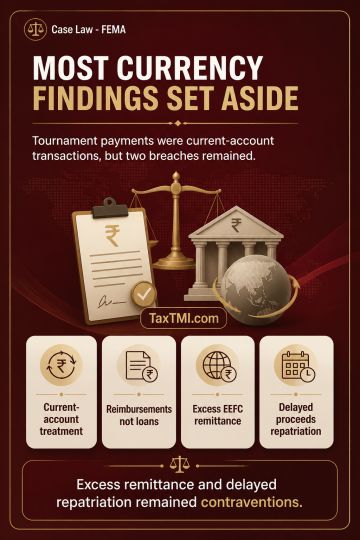
Current account treatment of overseas tournament services removed most FEMA findings, but excess EEFC remittance and delayed repatriation remained bre...
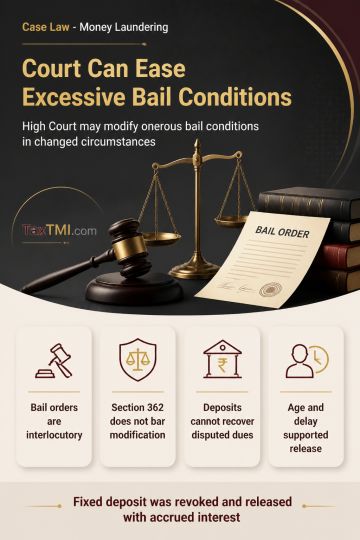
Modification of bail conditions remains available through inherent jurisdiction where onerous deposits undermine justice and cannot recover disputed d...
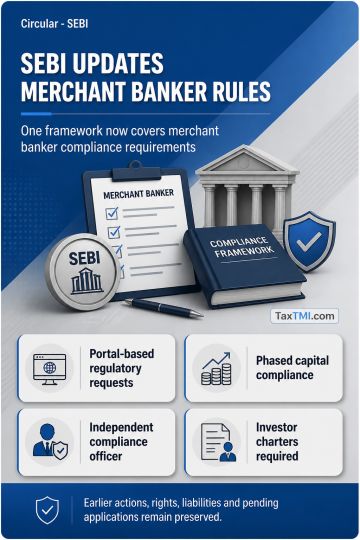
Merchant banker regulation consolidates registration, governance, capital, reporting, outsourcing and investor-protection requirements under an update...
The High Court examined the issue of liability to clear statutory dues post-insolvency proceedings under the Insolvency and Bankruptcy Code 2016. The resolution plan approved by NCLT provided for payment of Rs. 25 crores towards clearing all statutory dues, including claims by government authorities. Referring to the Supreme Court's decision in Ghanshyam Mishra and Sons Pvt. Ltd. case, the High Court held that on the date of approval of the resolution plan, all claims not part of the plan stand extinguished. Consequently, the petitioner's liability arising under the AP VAT Act or GST Act stands extinguished to the extent of its liability up to the date of approval of the resolution plan. The contention that NCLT's order is not binding due to Section 88 of the GST Act was rejected, as Section 238 of the IBC provides for a non-obstante clause overriding other laws. The High Court allowed the petitions, setting aside the demand-cum-adjudication orders issued by the tax authorities.
The High Court examined the issue of liability to clear statutory dues post-insolvency proceedings under the Insolvency and Bankruptcy Code 2016. The resolution plan approved by NCLT provided for payment of Rs. 25 crores towards clearing all statutory dues, including claims by government authorities. Referring to the Supreme Court's decision in Ghanshyam Mishra and Sons Pvt. Ltd. case, the High Court held that on the date of approval of the resolution plan, all claims not part of the plan stand extinguished. Consequently, the petitioner's liability arising under the AP VAT Act or GST Act stands extinguished to the extent of its liability up to the date of approval of the resolution plan. The contention that NCLT's order is not binding due to Section 88 of the GST Act was rejected, as Section 238 of the IBC provides for a non-obstante clause overriding other laws. The High Court allowed the petitions, setting aside the demand-cum-adjudication orders issued by the tax authorities.
Note: It is a system-generated summary and is for quick reference only.
 TaxTMI
 of 4805





 Join Channel


 TaxTMI