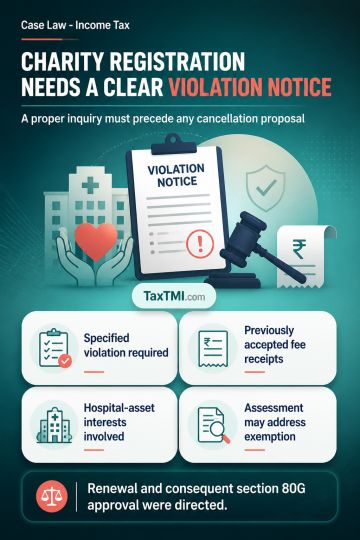
Charitable trust registration requires a specified-violation notice; settled cash deposits and related-party payments did not justify cancellation or ...
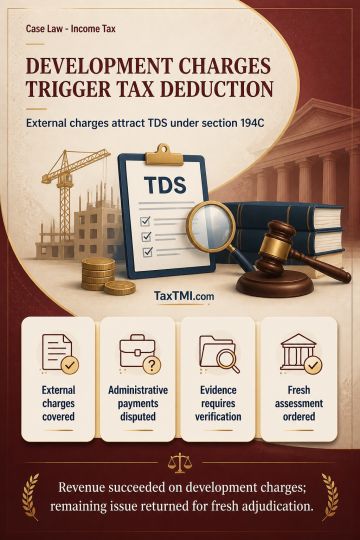
External development charges trigger TDS under section 194C, while disputed administrative payments require factual verification and fresh adjudicatio...
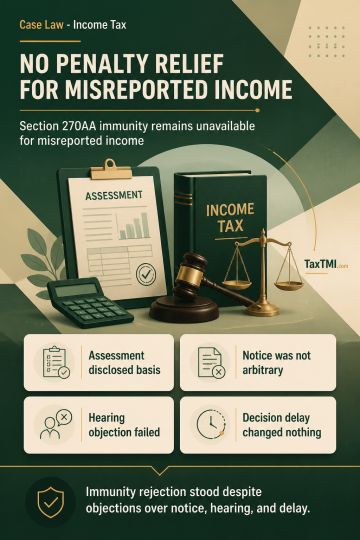
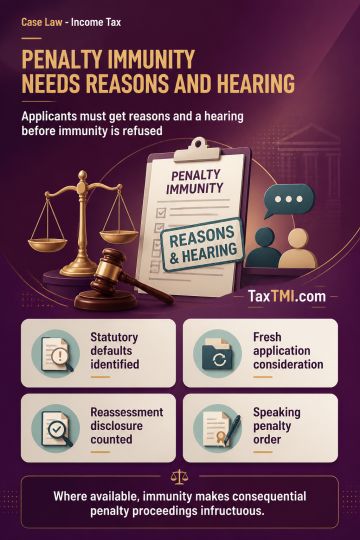
Section 270AA penalty immunity requires identified statutory defaults and a hearing before rejection; reassessment disclosure may constitute under-rep...
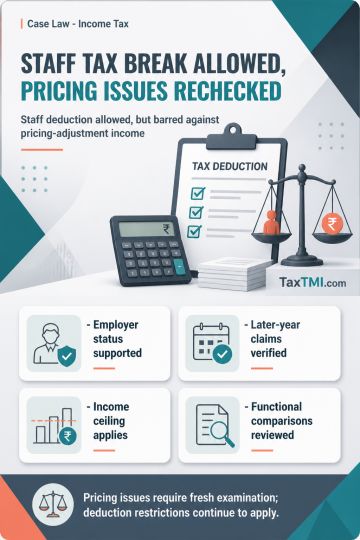
Section 80JJAA employee-cost deduction allowed for deployed staff but barred against transfer-pricing income enhancement, with pricing issues remanded...
Page of 4830
Press 'Enter' after typing page number.
141 to 160 of 96587 Results
❮
❯
❯❯
0 / 200
Expand Note
Add to Folder
No Folders have been created
+
Are you sure you want to delete "My most important" ?
The assessee, a Limited Liability Company (LLC) under US tax laws, was denied treaty benefits under the India-USA Double Taxation Avoidance Agreement (DTAA) by the Assessing Officer (AO), who proposed to assess the income at 25% instead of the concessional 15% rate. The AO concluded that the LLC did not qualify as a 'Resident' under Article 4 of the DTAA, as only entities liable to tax in their country are considered residents. However, the Tribunal held that the assessee, being a resident under Article 4 by virtue of incorporation and recognition as a separate entity from its members, qualifies as a 'person'. The assessee is liable to tax in the US under its Income Tax Law, as LLCs have the option to be taxed as corporations or have their income clubbed with their owners' income. The tax authorities erred by considering the assessee a fiscally transparent entity without appreciating the phrase 'liable to tax'. The Tribunal gave precedence to the intent of the India-US Treaty, recognizing the concept of fiscally transparent entities and relying on the Mumbai Tribunal's judgment in Linklaters LLP case. The exclusion provision in paragraph 1(b) of Article 4 implies that fiscally transparent partnerships were already regarded as 'liable to tax'. Consequently, the.
The assessee, a Limited Liability Company (LLC) under US tax laws, was denied treaty benefits under the India-USA Double Taxation Avoidance Agreement (DTAA) by the Assessing Officer (AO), who proposed to assess the income at 25% instead of the concessional 15% rate. The AO concluded that the LLC did not qualify as a 'Resident' under Article 4 of the DTAA, as only entities liable to tax in their country are considered residents. However, the Tribunal held that the assessee, being a resident under Article 4 by virtue of incorporation and recognition as a separate entity from its members, qualifies as a 'person'. The assessee is liable to tax in the US under its Income Tax Law, as LLCs have the option to be taxed as corporations or have their income clubbed with their owners' income. The tax authorities erred by considering the assessee a fiscally transparent entity without appreciating the phrase 'liable to tax'. The Tribunal gave precedence to the intent of the India-US Treaty, recognizing the concept of fiscally transparent entities and relying on the Mumbai Tribunal's judgment in Linklaters LLP case. The exclusion provision in paragraph 1(b) of Article 4 implies that fiscally transparent partnerships were already regarded as 'liable to tax'. Consequently, the.
Note: It is a system-generated summary and is for quick reference only.
 TaxTMI
  TaxTMI
 of 4830







 Join Channel


