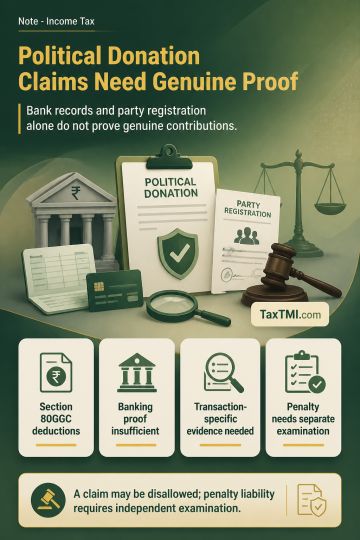
Political contribution deductions require genuine transactions; banking records and party registration alone cannot defeat evidence of accommodation e...
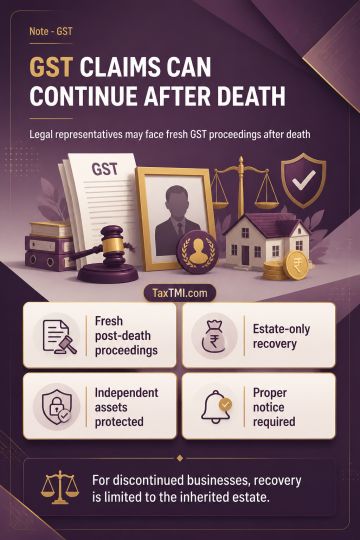
Post-death GST liability permits fresh proceedings against legal representatives, while discontinued-business recovery remains limited to the inherite...
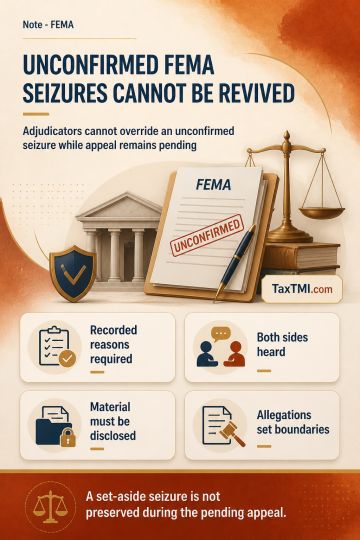
Non-confirmation of FEMA seizure prevents adjudicators from overriding pending appellate findings on recorded reasons and suspected foreign asset hold...
The assessee, a Limited Liability Company (LLC) under US tax laws, was denied treaty benefits under the India-USA Double Taxation Avoidance Agreement (DTAA) by the Assessing Officer (AO), who proposed to assess the income at 25% instead of the concessional 15% rate. The AO concluded that the LLC did not qualify as a 'Resident' under Article 4 of the DTAA, as only entities liable to tax in their country are considered residents. However, the Tribunal held that the assessee, being a resident under Article 4 by virtue of incorporation and recognition as a separate entity from its members, qualifies as a 'person'. The assessee is liable to tax in the US under its Income Tax Law, as LLCs have the option to be taxed as corporations or have their income clubbed with their owners' income. The tax authorities erred by considering the assessee a fiscally transparent entity without appreciating the phrase 'liable to tax'. The Tribunal gave precedence to the intent of the India-US Treaty, recognizing the concept of fiscally transparent entities and relying on the Mumbai Tribunal's judgment in Linklaters LLP case. The exclusion provision in paragraph 1(b) of Article 4 implies that fiscally transparent partnerships were already regarded as 'liable to tax'. Consequently, the.
The assessee, a Limited Liability Company (LLC) under US tax laws, was denied treaty benefits under the India-USA Double Taxation Avoidance Agreement (DTAA) by the Assessing Officer (AO), who proposed to assess the income at 25% instead of the concessional 15% rate. The AO concluded that the LLC did not qualify as a 'Resident' under Article 4 of the DTAA, as only entities liable to tax in their country are considered residents. However, the Tribunal held that the assessee, being a resident under Article 4 by virtue of incorporation and recognition as a separate entity from its members, qualifies as a 'person'. The assessee is liable to tax in the US under its Income Tax Law, as LLCs have the option to be taxed as corporations or have their income clubbed with their owners' income. The tax authorities erred by considering the assessee a fiscally transparent entity without appreciating the phrase 'liable to tax'. The Tribunal gave precedence to the intent of the India-US Treaty, recognizing the concept of fiscally transparent entities and relying on the Mumbai Tribunal's judgment in Linklaters LLP case. The exclusion provision in paragraph 1(b) of Article 4 implies that fiscally transparent partnerships were already regarded as 'liable to tax'. Consequently, the.
Note: It is a system-generated summary and is for quick reference only.
 TaxTMI
  TaxTMI