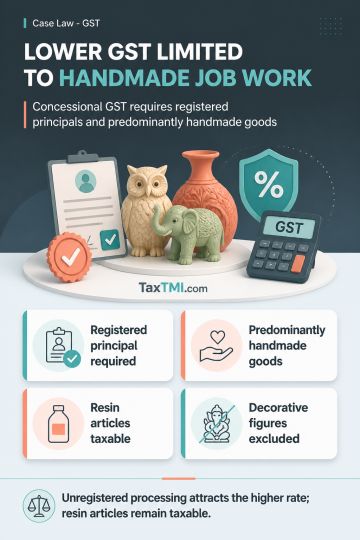
Handicraft job work receives concessional GST only for registered principals and predominantly handmade goods; commercial resin articles remain taxabl...
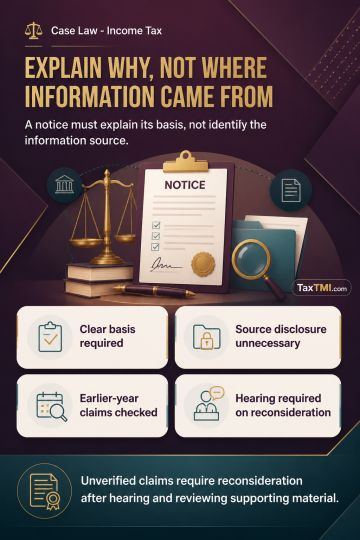
Reassessment disclosure requirements permit stated reasons without revealing information sources, but prior-taxation claims require full examination b...
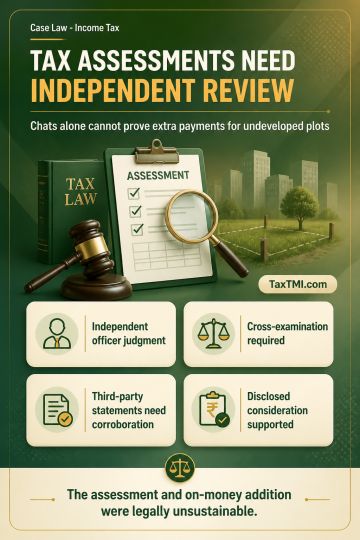
Independent assessment discretion and corroborated electronic evidence determine validity of on-money additions and undisclosed-consideration assessme...
Long-term capital gains deduction u/s 54F can be claimed for investment in a residential property not solely owned by the assessee. The assessing officer's sole objection that the land on which capital gains were utilized for construction is not in the assessee's name but her husband's name is invalid. A purposive interpretation favoring the deduction should be preferred over a literal construction. Section 54F is a beneficial provision and should be interpreted liberally in favor of the taxpayer. The deduction should not be denied on hyper-technical grounds. The term 'assessee' must be given a wide interpretation to include legal heirs. Registration of the property in the assessee's name is not mandatory for claiming the deduction u/s 54. The terms 'own', 'ownership', and 'owned' have a wide connotation, and possession with the right to use and enjoy the property's usufructs constitutes ownership. Therefore, the assessee is eligible for deduction u/s 54F for investment in a residential house in her husband's name.
Long-term capital gains deduction u/s 54F can be claimed for investment in a residential property not solely owned by the assessee. The assessing officer's sole objection that the land on which capital gains were utilized for construction is not in the assessee's name but her husband's name is invalid. A purposive interpretation favoring the deduction should be preferred over a literal construction. Section 54F is a beneficial provision and should be interpreted liberally in favor of the taxpayer. The deduction should not be denied on hyper-technical grounds. The term 'assessee' must be given a wide interpretation to include legal heirs. Registration of the property in the assessee's name is not mandatory for claiming the deduction u/s 54. The terms 'own', 'ownership', and 'owned' have a wide connotation, and possession with the right to use and enjoy the property's usufructs constitutes ownership. Therefore, the assessee is eligible for deduction u/s 54F for investment in a residential house in her husband's name.
Note: It is a system-generated summary and is for quick reference only.
 TaxTMI
  TaxTMI
 of 4828







 Join Channel


