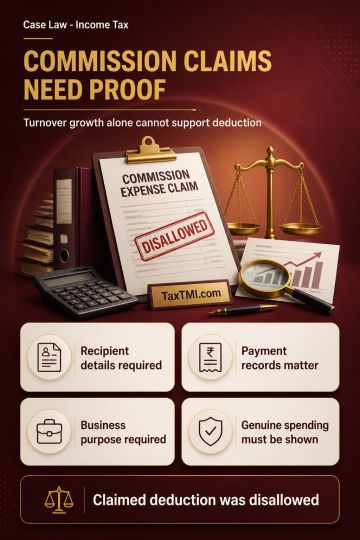
Business expenditure deduction requires proof of genuine commission payments and commercial allowability; turnover growth alone cannot validate the cl...
Article 8 treaty coverage excluded third-party airline support services, while documented demonetisation cash receipts remained accepted business inco...
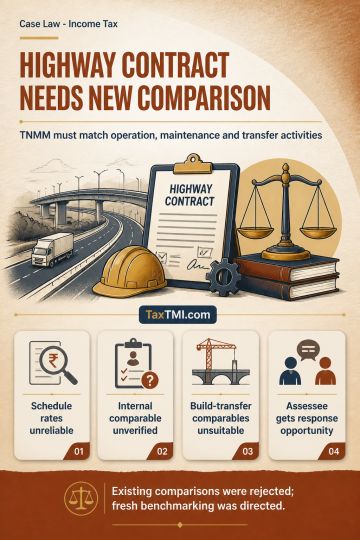
Functional comparability under TNMM requires highway contract benchmarks to reflect operation, maintenance and transfer activities, requiring fresh be...
The High Court held that the Assessing Officer's failure to frame a draft assessment order and directly passing a final order was violative of the mandatory provisions of Section 144C, rendering the final order a nullity. The court emphasized that it was imperative for the Assessing Officer to frame an order in draft before issuing the final assessment order. Regarding the limitation period u/s 153, the court clarified that it cannot enlarge or expand the statutorily prescribed period for completing the assessment. The court found it unnecessary to examine additional challenges raised against the final assessment orders since the assessment period had expired. Consequently, the writ petitions were allowed.
The High Court held that the Assessing Officer's failure to frame a draft assessment order and directly passing a final order was violative of the mandatory provisions of Section 144C, rendering the final order a nullity. The court emphasized that it was imperative for the Assessing Officer to frame an order in draft before issuing the final assessment order. Regarding the limitation period u/s 153, the court clarified that it cannot enlarge or expand the statutorily prescribed period for completing the assessment. The court found it unnecessary to examine additional challenges raised against the final assessment orders since the assessment period had expired. Consequently, the writ petitions were allowed.
Note: It is a system-generated summary and is for quick reference only.
 TaxTMI
 of 4784




 Join Channel


 TaxTMI
