Fair-rent assessment requires consideration of lease terms, valuation principles and prevailing market rent; the certificate was quashed for fresh rev...
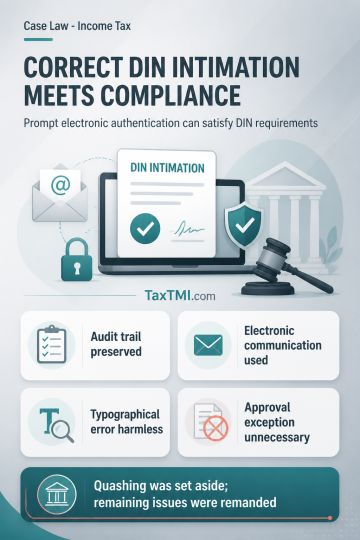
Document Identification Number compliance is satisfied when electronically communicated orders are promptly authenticated through a correctly identifi...
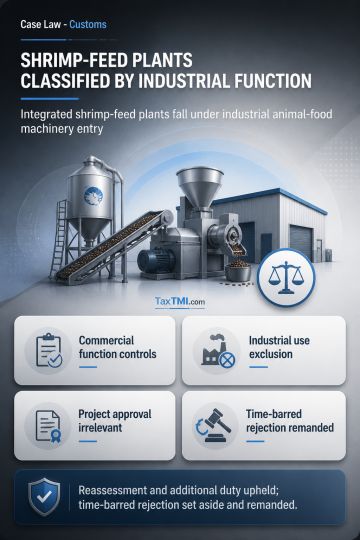
Industrial shrimp-feed machinery classification follows its commercial function, placing integrated production plants under the specific industrial fo...
Section 29(2) of the Limitation Act, 1963 is applicable in relation to the period of limitation under tax laws like the Central Excise Act and the APGST Act. The Supreme Court has held that where the special law restricts the additional period for condonation of delay, it effectively excludes Section 5 of the Limitation Act by necessary implication. Section 107 of the APGST Act prescribes the limitation period for filing appeals and restricts the condonable period to 30 days. Therefore, Section 5 of the Limitation Act stands excluded, and the appellate authority cannot condone delay beyond 30 days u/s 107(4) of the APGST Act. The HC dismissed the petition, upholding the applicability of Section 29(2) and the exclusion of Section 5 in such cases.
Section 29(2) of the Limitation Act, 1963 is applicable in relation to the period of limitation under tax laws like the Central Excise Act and the APGST Act. The Supreme Court has held that where the special law restricts the additional period for condonation of delay, it effectively excludes Section 5 of the Limitation Act by necessary implication. Section 107 of the APGST Act prescribes the limitation period for filing appeals and restricts the condonable period to 30 days. Therefore, Section 5 of the Limitation Act stands excluded, and the appellate authority cannot condone delay beyond 30 days u/s 107(4) of the APGST Act. The HC dismissed the petition, upholding the applicability of Section 29(2) and the exclusion of Section 5 in such cases.
Note: It is a system-generated summary and is for quick reference only.
 TaxTMI
 of 4805






 Join Channel


 TaxTMI
