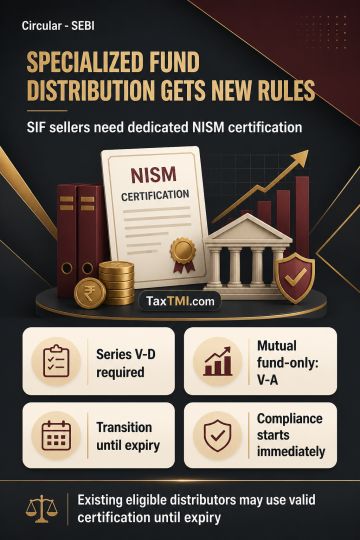
Specialized Investment Fund distribution now requires dedicated certification, while transitional recognition preserves existing qualified distributor...
Overlapping GST proceedings require Central and State authorities to designate one competent authority for coordinated adjudication of the same matter...
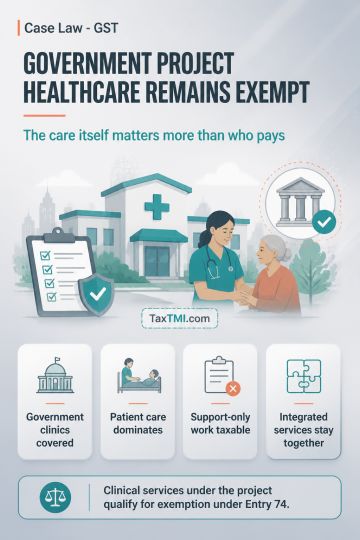
Composite healthcare supplies retain exemption when patient care is the contract's essential character, despite payment through an implementing agency...
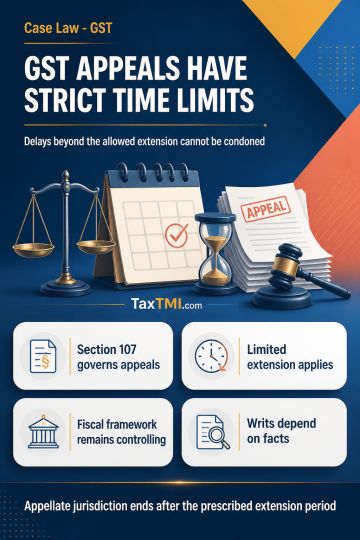
Section 29(2) of the Limitation Act, 1963 is applicable in relation to the period of limitation under tax laws like the Central Excise Act and the APGST Act. The Supreme Court has held that where the special law restricts the additional period for condonation of delay, it effectively excludes Section 5 of the Limitation Act by necessary implication. Section 107 of the APGST Act prescribes the limitation period for filing appeals and restricts the condonable period to 30 days. Therefore, Section 5 of the Limitation Act stands excluded, and the appellate authority cannot condone delay beyond 30 days u/s 107(4) of the APGST Act. The HC dismissed the petition, upholding the applicability of Section 29(2) and the exclusion of Section 5 in such cases.
Section 29(2) of the Limitation Act, 1963 is applicable in relation to the period of limitation under tax laws like the Central Excise Act and the APGST Act. The Supreme Court has held that where the special law restricts the additional period for condonation of delay, it effectively excludes Section 5 of the Limitation Act by necessary implication. Section 107 of the APGST Act prescribes the limitation period for filing appeals and restricts the condonable period to 30 days. Therefore, Section 5 of the Limitation Act stands excluded, and the appellate authority cannot condone delay beyond 30 days u/s 107(4) of the APGST Act. The HC dismissed the petition, upholding the applicability of Section 29(2) and the exclusion of Section 5 in such cases.
Note: It is a system-generated summary and is for quick reference only.
 TaxTMI
 of 4805









 Join Channel


 TaxTMI