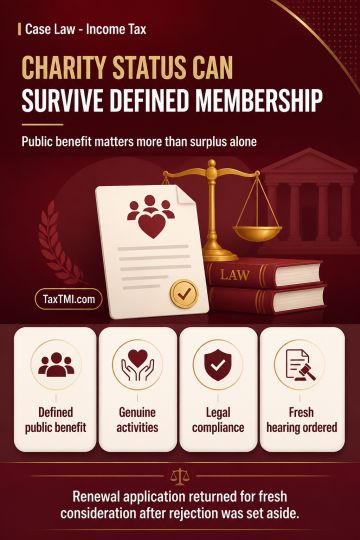
Defined public benefit can retain charitable character; registration renewal requires examining genuine activities and legal compliance, not surplus a...
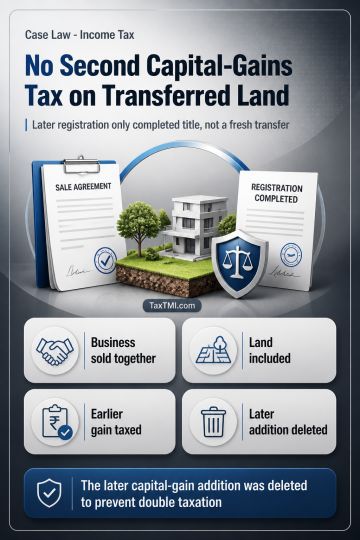
Capital reduction is distinct from share buy-back, preventing buy-back tax; restructuring interest and related business deductions also survive scruti...
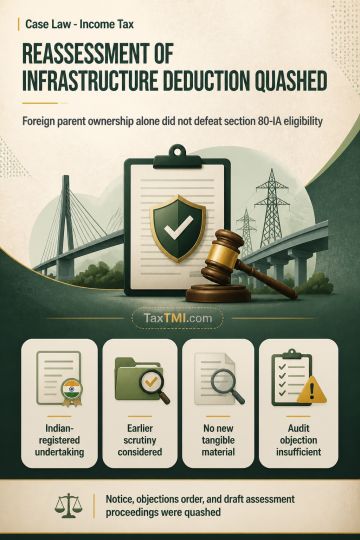
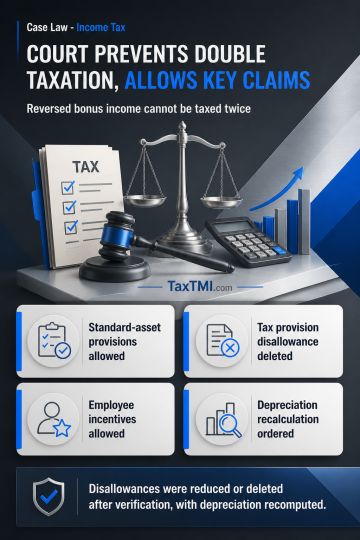
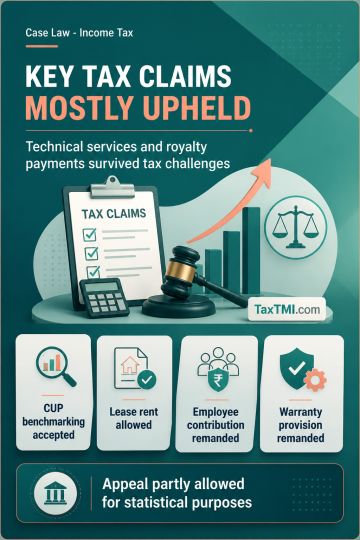
Transfer pricing and tax deductions upheld on established principles, while employee contributions and warranty provisions returned for fresh examinat...
Captive transfer pricing relies on industrial consumer tariffs, while genuine quotations can benchmark effluent treatment transfers under the Other Me...
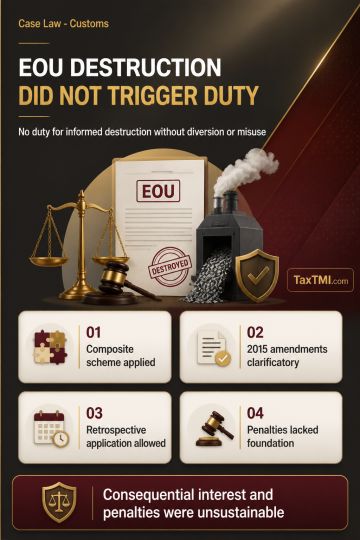
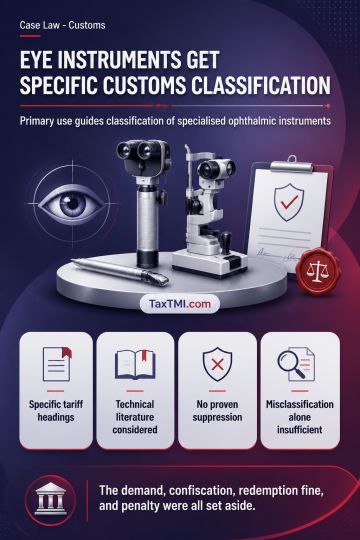
Specific tariff classification for ophthalmic instruments and extended limitation principles determine the treatment of duty demands, confiscation, an...
This case pertains to a prayer for rectification in the Register of Members concerning the transfer of shares, invoking Section 154 of the NCLT Rules. The key points are: The appeal against the relief granted by NCLT in the Principal Company Petitions was sustainable only when the Company (Appellant No.1) was contesting the matter as a legal entity. However, upon withdrawal by the Company, Appellant No. 2 (an individual) had no cause of action flowing from Appellant No.1. Consequently, the appeals were dismissed without prejudice to Appellant No. 2's rights u/s 59 of the Companies Act. The relief sought for re-entering names and share configuration in the Register of Members could not be pressed by Appellant No. 2 in the absence of an effective contest by Appellant No. 1 (the Company). Appellant No. 2 is free to resort to appropriate proceedings u/s 59(2) of the Companies Act, 2013, which will be decided per the law.
This case pertains to a prayer for rectification in the Register of Members concerning the transfer of shares, invoking Section 154 of the NCLT Rules. The key points are: The appeal against the relief granted by NCLT in the Principal Company Petitions was sustainable only when the Company (Appellant No.1) was contesting the matter as a legal entity. However, upon withdrawal by the Company, Appellant No. 2 (an individual) had no cause of action flowing from Appellant No.1. Consequently, the appeals were dismissed without prejudice to Appellant No. 2's rights u/s 59 of the Companies Act. The relief sought for re-entering names and share configuration in the Register of Members could not be pressed by Appellant No. 2 in the absence of an effective contest by Appellant No. 1 (the Company). Appellant No. 2 is free to resort to appropriate proceedings u/s 59(2) of the Companies Act, 2013, which will be decided per the law.
Note: It is a system-generated summary and is for quick reference only.
 TaxTMI
 of 4805








 Join Channel


 TaxTMI