Specialized Investment Fund distribution now requires dedicated certification, while transitional recognition preserves existing qualified distributor...
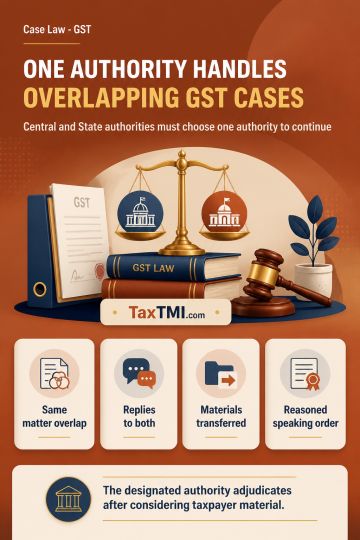
Overlapping GST proceedings require Central and State authorities to designate one competent authority for coordinated adjudication of the same matter...
Composite healthcare supplies retain exemption when patient care is the contract's essential character, despite payment through an implementing agency...
This case pertains to the utilization of ineligible CENVAT credit by a company. The key points are: The company availed ineligible CENVAT credit amounting to Rs. 1,30,84,835/- which was not permissible under the CENVAT Credit Rules, 2004. As per Section 73 of the Finance Act, 1994, a show-cause notice for non-payment of service tax must be issued within 18 months, extendable to 5 years in case of fraud, misstatement or suppression of facts. The company had disclosed all relevant information regarding CENVAT credit availed in its ST-3 returns. The Commissioner alleged misstatement and contravention with intent to evade tax, which the High Court found perverse as the show-cause notice did not mention willful misstatement or suppression. The Supreme Court has held that for invoking extended limitation, the show-cause notice must specifically mention willful misstatement or suppression. As the company disclosed facts and there was no allegation of willful suppression, the CESTAT order was upheld, and the appeal dismissed.
This case pertains to the utilization of ineligible CENVAT credit by a company. The key points are: The company availed ineligible CENVAT credit amounting to Rs. 1,30,84,835/- which was not permissible under the CENVAT Credit Rules, 2004. As per Section 73 of the Finance Act, 1994, a show-cause notice for non-payment of service tax must be issued within 18 months, extendable to 5 years in case of fraud, misstatement or suppression of facts. The company had disclosed all relevant information regarding CENVAT credit availed in its ST-3 returns. The Commissioner alleged misstatement and contravention with intent to evade tax, which the High Court found perverse as the show-cause notice did not mention willful misstatement or suppression. The Supreme Court has held that for invoking extended limitation, the show-cause notice must specifically mention willful misstatement or suppression. As the company disclosed facts and there was no allegation of willful suppression, the CESTAT order was upheld, and the appeal dismissed.
Note: It is a system-generated summary and is for quick reference only.
 TaxTMI
 of 4805










 Join Channel


 TaxTMI