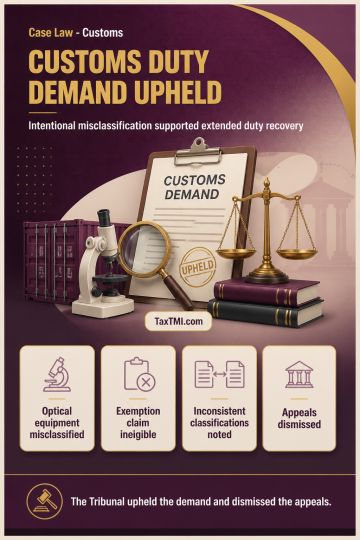
Transaction value rejection requires reliable corroboration; refundable VAT is excluded and temporary registration does not defeat new-vehicle exempti...
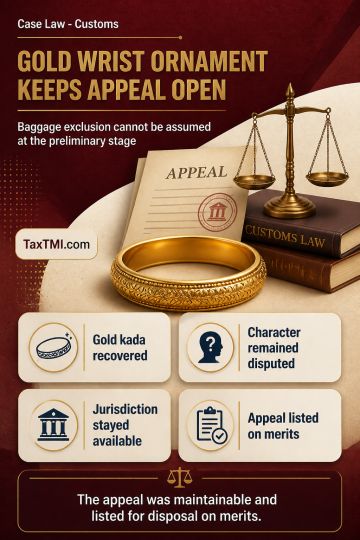
Appellate jurisdiction remains available where a wrist-worn gold ornament cannot conclusively be characterised as imported baggage at the preliminary ...
Written complaint requirement bars cognizance on police reports for securities offences, while unsupported breach of trust and cheating allegations fa...
Page of 4801
Press 'Enter' after typing page number.
341 to 360 of 96001 Results
❮
❯
❯❯
0 / 200
Expand Note
Add to Folder
No Folders have been created
+
Are you sure you want to delete "My most important" ?
This case pertains to the utilization of ineligible CENVAT credit by a company. The key points are: The company availed ineligible CENVAT credit amounting to Rs. 1,30,84,835/- which was not permissible under the CENVAT Credit Rules, 2004. As per Section 73 of the Finance Act, 1994, a show-cause notice for non-payment of service tax must be issued within 18 months, extendable to 5 years in case of fraud, misstatement or suppression of facts. The company had disclosed all relevant information regarding CENVAT credit availed in its ST-3 returns. The Commissioner alleged misstatement and contravention with intent to evade tax, which the High Court found perverse as the show-cause notice did not mention willful misstatement or suppression. The Supreme Court has held that for invoking extended limitation, the show-cause notice must specifically mention willful misstatement or suppression. As the company disclosed facts and there was no allegation of willful suppression, the CESTAT order was upheld, and the appeal dismissed.
This case pertains to the utilization of ineligible CENVAT credit by a company. The key points are: The company availed ineligible CENVAT credit amounting to Rs. 1,30,84,835/- which was not permissible under the CENVAT Credit Rules, 2004. As per Section 73 of the Finance Act, 1994, a show-cause notice for non-payment of service tax must be issued within 18 months, extendable to 5 years in case of fraud, misstatement or suppression of facts. The company had disclosed all relevant information regarding CENVAT credit availed in its ST-3 returns. The Commissioner alleged misstatement and contravention with intent to evade tax, which the High Court found perverse as the show-cause notice did not mention willful misstatement or suppression. The Supreme Court has held that for invoking extended limitation, the show-cause notice must specifically mention willful misstatement or suppression. As the company disclosed facts and there was no allegation of willful suppression, the CESTAT order was upheld, and the appeal dismissed.
Note: It is a system-generated summary and is for quick reference only.
 TaxTMI
 of 4801






 Join Channel


 TaxTMI