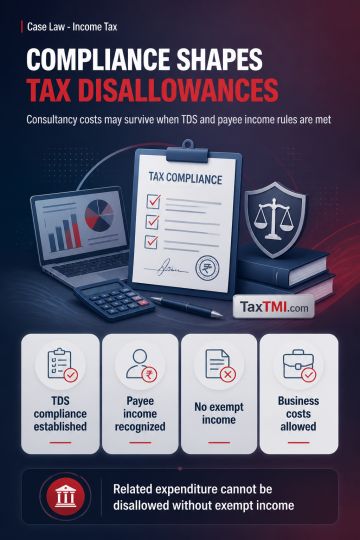
Tax deduction compliance and payee income recognition govern consultancy disallowance, while no exempt income prevents related expenditure disallowanc...
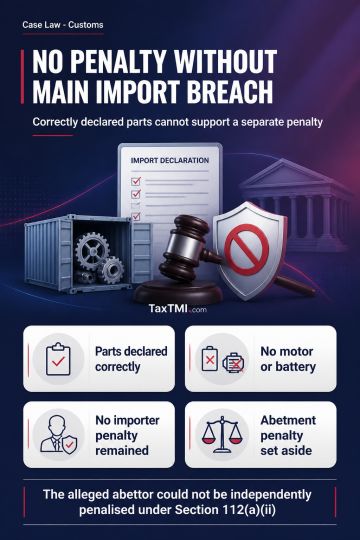
Derivative abetment liability fails when correctly declared imported components establish no underlying improper importation by the principal importer...
Tax exemption for regulatory authority income applies retrospectively, subject to non-commercial activity, unchanged income sources, and return filing...
Page of 4788
Press 'Enter' after typing page number.
361 to 380 of 95752 Results
❮
❯
❯❯
0 / 200
Expand Note
Add to Folder
No Folders have been created
+
Are you sure you want to delete "My most important" ?
Legal and professional charges incurred by the assessee company were disallowed by the Assessing Officer (AO) on the grounds that they were capital expenditure and personal expenses not wholly and exclusively for business purposes. The Tribunal held that no payment was made as penalty, and the expenses were incurred for defending the company in the ordinary course of business to protect its image and ensure smooth conduct of operations. The payments were made through banking channels after TDS deduction, with identifiable payees, and supported by documentary evidence. They did not fall under the ambit of Explanation 1 to Section 37 as penal, capital or personal in nature. The Tribunal opined that the payments were mere fees paid to advocates for defending the company's case, akin to fees for income tax disputes, and hence allowable as deduction. The AO was directed to allow the deduction.
Legal and professional charges incurred by the assessee company were disallowed by the Assessing Officer (AO) on the grounds that they were capital expenditure and personal expenses not wholly and exclusively for business purposes. The Tribunal held that no payment was made as penalty, and the expenses were incurred for defending the company in the ordinary course of business to protect its image and ensure smooth conduct of operations. The payments were made through banking channels after TDS deduction, with identifiable payees, and supported by documentary evidence. They did not fall under the ambit of Explanation 1 to Section 37 as penal, capital or personal in nature. The Tribunal opined that the payments were mere fees paid to advocates for defending the company's case, akin to fees for income tax disputes, and hence allowable as deduction. The AO was directed to allow the deduction.
Note: It is a system-generated summary and is for quick reference only.
 TaxTMI
 of 4788












 Join Channel


 TaxTMI
