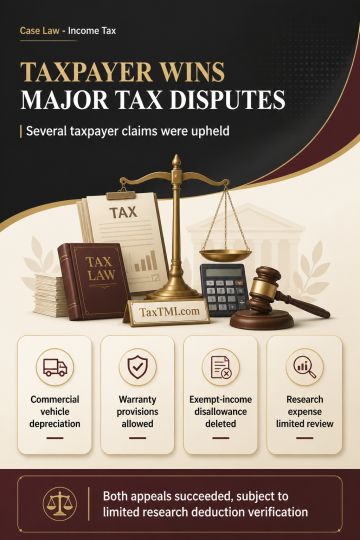
Commercial vehicle depreciation, scientifically determined warranty provisions and exempt-income disallowances were resolved in favour of the taxpayer...
Inherited property sale proceeds require capital-gains treatment where ownership is supported by evidence, not suspicion or unverified signature doubt...
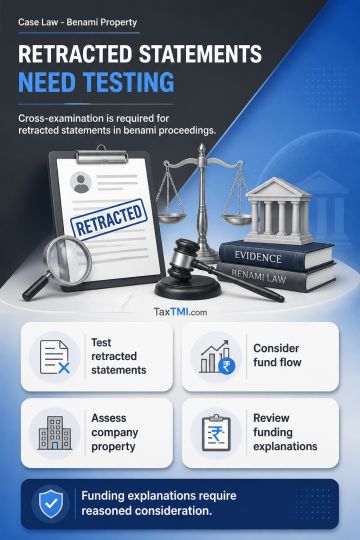
Cross-examination of retracted statements is essential where foundational evidence supports a benami allegation and documented funding explanations re...
Capital-goods exemption covers plant-modernisation accessories, while the import restriction applies only to earlier capital-goods components and spar...
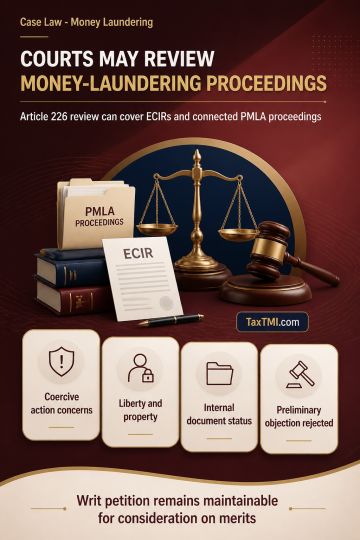
Constitutional judicial review permits challenges to ECIRs and connected money-laundering proceedings where coercive action affects fundamental intere...
Insolvency and BankruptcyAugust 27, 2024Case LawsHC
Challenge to an interim arbitral award u/s 31(6) of the Arbitration and Conciliation Act, 1996. The key issues are: (1) whether the rejection of an application u/s 16 regarding the arbitrator's jurisdiction operates as res judicata for the interim award, and (2) whether alleged future losses covered by a counterclaim could be dismissed due to the approval of a Resolution Plan under the Insolvency and Bankruptcy Code (IBC). The court held that the earlier rejection u/s 16 did not operate as res judicata, as the subsequent approval of the Resolution Plan extinguishing creditors' rights altered the scenario, providing a fresh cause of action. Regarding the second issue, the court ruled that all claims, including future losses, stood extinguished upon approval of the Resolution Plan, as per Section 31 of the IBC and the Supreme Court's decision in Ghanashyam Mishra. Consequently, the arbitrator was justified in dismissing the counterclaims at the outset due to the Resolution Plan's approval. The court found no grounds to interfere with the interim award u/s 34, as the arbitrator's findings were legally correct. The petition was dismissed.
Challenge to an interim arbitral award u/s 31(6) of the Arbitration and Conciliation Act, 1996. The key issues are: (1) whether the rejection of an application u/s 16 regarding the arbitrator's jurisdiction operates as res judicata for the interim award, and (2) whether alleged future losses covered by a counterclaim could be dismissed due to the approval of a Resolution Plan under the Insolvency and Bankruptcy Code (IBC). The court held that the earlier rejection u/s 16 did not operate as res judicata, as the subsequent approval of the Resolution Plan extinguishing creditors' rights altered the scenario, providing a fresh cause of action. Regarding the second issue, the court ruled that all claims, including future losses, stood extinguished upon approval of the Resolution Plan, as per Section 31 of the IBC and the Supreme Court's decision in Ghanashyam Mishra. Consequently, the arbitrator was justified in dismissing the counterclaims at the outset due to the Resolution Plan's approval. The court found no grounds to interfere with the interim award u/s 34, as the arbitrator's findings were legally correct. The petition was dismissed.
Note: It is a system-generated summary and is for quick reference only.
 TaxTMI
 of 4782










 Join Channel


 TaxTMI
