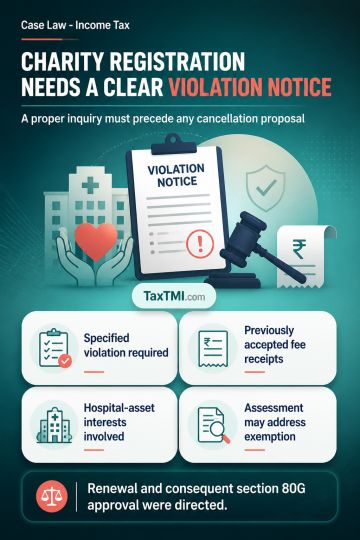
Charitable trust registration requires a specified-violation notice; settled cash deposits and related-party payments did not justify cancellation or ...
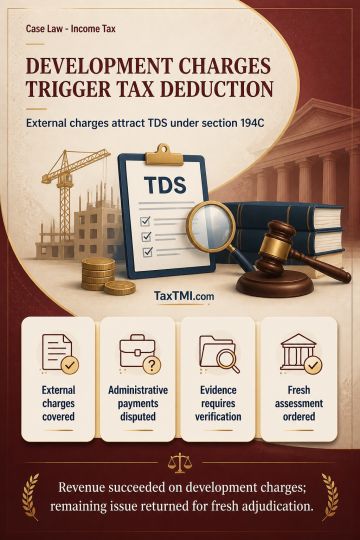
External development charges trigger TDS under section 194C, while disputed administrative payments require factual verification and fresh adjudicatio...
Section 270AA penalty immunity requires identified statutory defaults and a hearing before rejection; reassessment disclosure may constitute under-rep...
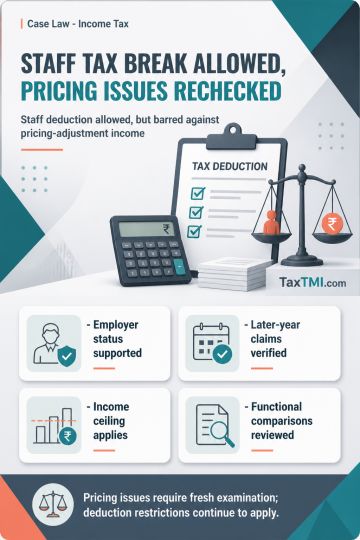
Section 80JJAA employee-cost deduction allowed for deployed staff but barred against transfer-pricing income enhancement, with pricing issues remanded...
Transfer-pricing methodology protects commercially genuine associated-enterprise payments, while pre-2016 secondary adjustments and related notional i...
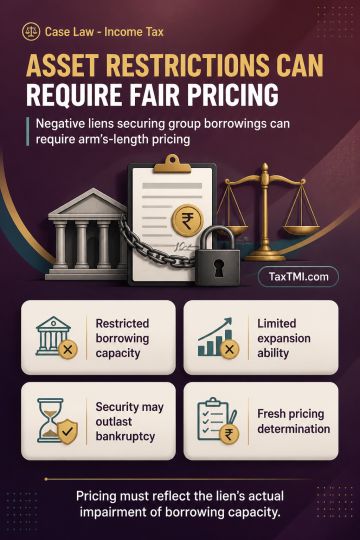
Negative liens over operating assets can constitute international transactions requiring arm's-length pricing reflecting restricted borrowing and expa...
Cross-examination rights in Customs Broker revocation inquiries require witness examination; procedural denial may be cured through fresh adjudication...
The Appellate Tribunal addressed the issue of estimation of income and rejection of duly audited books of accounts of the assessee firm u/s 145(3) of the Act. It held that after rejecting the books of account, the Assessing Officer ought to have estimated the income on a logical basis. Since the income of the assessee firm for the preceding and succeeding five years had been framed u/s 143(3), the Tribunal opined that the average net profit rate of those years could safely be adopted as a yardstick for estimating its income for the year under consideration. This view was supported by the Allahabad High Court's decision in Dr. Prabhu Dayal Yadav's case. As the income disclosed by the assessee firm during the year was higher than the average net profit rate, and no incriminating material was found during the survey proceedings, the Tribunal was convinced that the average net profit rate could be used for estimating income. However, the Assessing Officer was directed to verify the net profit rates of the preceding and succeeding years while giving effect to the observations. The Tribunal set aside the CIT(Appeals) order concurring with the assessee's claim that books were not liable to be rejected but principally concurred with the acceptance of the returned income. The revenue's appeal was partly allowed.
The Appellate Tribunal addressed the issue of estimation of income and rejection of duly audited books of accounts of the assessee firm u/s 145(3) of the Act. It held that after rejecting the books of account, the Assessing Officer ought to have estimated the income on a logical basis. Since the income of the assessee firm for the preceding and succeeding five years had been framed u/s 143(3), the Tribunal opined that the average net profit rate of those years could safely be adopted as a yardstick for estimating its income for the year under consideration. This view was supported by the Allahabad High Court's decision in Dr. Prabhu Dayal Yadav's case. As the income disclosed by the assessee firm during the year was higher than the average net profit rate, and no incriminating material was found during the survey proceedings, the Tribunal was convinced that the average net profit rate could be used for estimating income. However, the Assessing Officer was directed to verify the net profit rates of the preceding and succeeding years while giving effect to the observations. The Tribunal set aside the CIT(Appeals) order concurring with the assessee's claim that books were not liable to be rejected but principally concurred with the acceptance of the returned income. The revenue's appeal was partly allowed.
Note: It is a system-generated summary and is for quick reference only.
 TaxTMI
  TaxTMI
 of 4828


















 Join Channel


