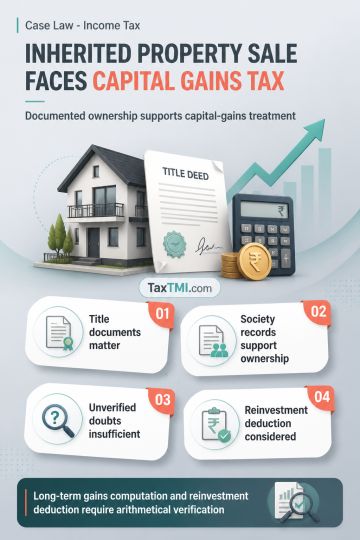
Inherited property sale proceeds require capital-gains treatment where ownership is supported by evidence, not suspicion or unverified signature doubt...
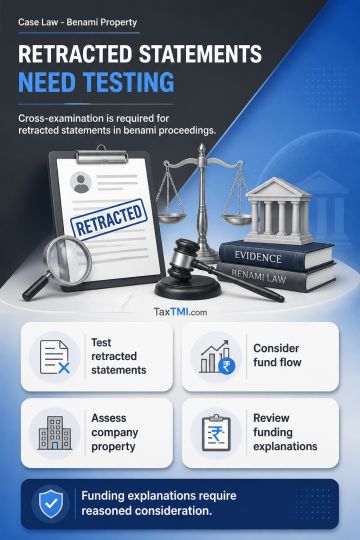
Cross-examination of retracted statements is essential where foundational evidence supports a benami allegation and documented funding explanations re...
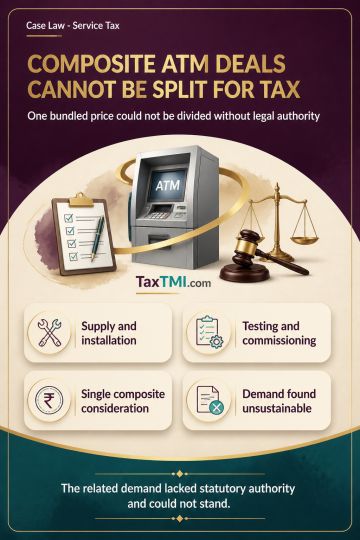
Capital-goods exemption covers plant-modernisation accessories, while the import restriction applies only to earlier capital-goods components and spar...
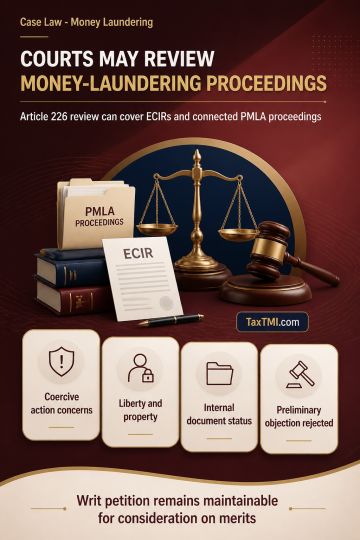
Constitutional judicial review permits challenges to ECIRs and connected money-laundering proceedings where coercive action affects fundamental intere...
The Income Tax Appellate Tribunal (ITAT) examined the taxability of income from a discretionary trust u/s 164(1) read with clause (ii) of Explanation 1 to Section 164 of the Income Tax Act, 1961. The key points are: Since the trustees have absolute discretion to apply the trust's income and corpus, and the beneficiaries' shares are not determined, the trust is considered a discretionary trust. The income is taxable at the maximum marginal rate as if it were the total income of an association of persons (AOP). However, the beneficiaries, being individuals, cannot be denied deductions u/ss 80C and 80TTA due to the deeming fiction of AOP. The Assessing Officer must consider allowing credit for TDS and deduction u/s 80C after verification. The ITAT emphasized that the correct income must be taxed strictly per the Act, regardless of any deficiencies in the prescribed ITR forms. The assessee's appeal was partly allowed.
The Income Tax Appellate Tribunal (ITAT) examined the taxability of income from a discretionary trust u/s 164(1) read with clause (ii) of Explanation 1 to Section 164 of the Income Tax Act, 1961. The key points are: Since the trustees have absolute discretion to apply the trust's income and corpus, and the beneficiaries' shares are not determined, the trust is considered a discretionary trust. The income is taxable at the maximum marginal rate as if it were the total income of an association of persons (AOP). However, the beneficiaries, being individuals, cannot be denied deductions u/ss 80C and 80TTA due to the deeming fiction of AOP. The Assessing Officer must consider allowing credit for TDS and deduction u/s 80C after verification. The ITAT emphasized that the correct income must be taxed strictly per the Act, regardless of any deficiencies in the prescribed ITR forms. The assessee's appeal was partly allowed.
Note: It is a system-generated summary and is for quick reference only.
 TaxTMI
 of 4786






 Join Channel


 TaxTMI