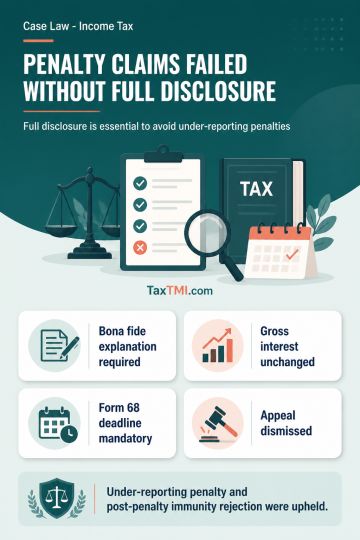
Bona fide disclosure requirements govern under-reporting penalties, and post-penalty immunity applications cannot secure available statutory protectio...
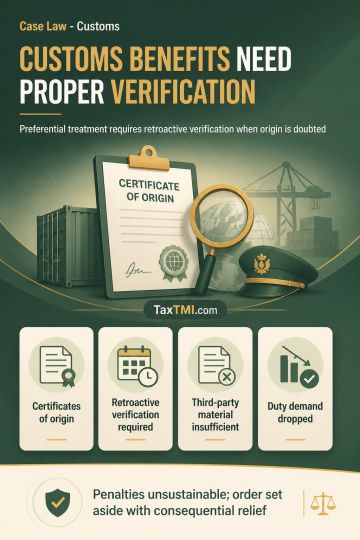
Certificate-of-origin verification procedure governs preferential customs benefits; denial without retroactive verification was set aside with consequ...
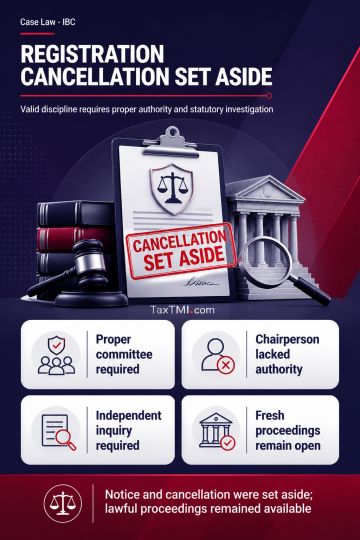
Disciplinary Committee jurisdiction and mandatory investigation requirements invalidated cancellation of an insolvency professional's registration and...
Retention of seized property survives where recorded reasons support proceeds of crime, while stayed investigation periods are excluded from limitatio...
The Income Tax Appellate Tribunal (ITAT) examined the taxability of income from a discretionary trust u/s 164(1) read with clause (ii) of Explanation 1 to Section 164 of the Income Tax Act, 1961. The key points are: Since the trustees have absolute discretion to apply the trust's income and corpus, and the beneficiaries' shares are not determined, the trust is considered a discretionary trust. The income is taxable at the maximum marginal rate as if it were the total income of an association of persons (AOP). However, the beneficiaries, being individuals, cannot be denied deductions u/ss 80C and 80TTA due to the deeming fiction of AOP. The Assessing Officer must consider allowing credit for TDS and deduction u/s 80C after verification. The ITAT emphasized that the correct income must be taxed strictly per the Act, regardless of any deficiencies in the prescribed ITR forms. The assessee's appeal was partly allowed.
The Income Tax Appellate Tribunal (ITAT) examined the taxability of income from a discretionary trust u/s 164(1) read with clause (ii) of Explanation 1 to Section 164 of the Income Tax Act, 1961. The key points are: Since the trustees have absolute discretion to apply the trust's income and corpus, and the beneficiaries' shares are not determined, the trust is considered a discretionary trust. The income is taxable at the maximum marginal rate as if it were the total income of an association of persons (AOP). However, the beneficiaries, being individuals, cannot be denied deductions u/ss 80C and 80TTA due to the deeming fiction of AOP. The Assessing Officer must consider allowing credit for TDS and deduction u/s 80C after verification. The ITAT emphasized that the correct income must be taxed strictly per the Act, regardless of any deficiencies in the prescribed ITR forms. The assessee's appeal was partly allowed.
Note: It is a system-generated summary and is for quick reference only.
 TaxTMI
 of 4798









 Join Channel


 TaxTMI
