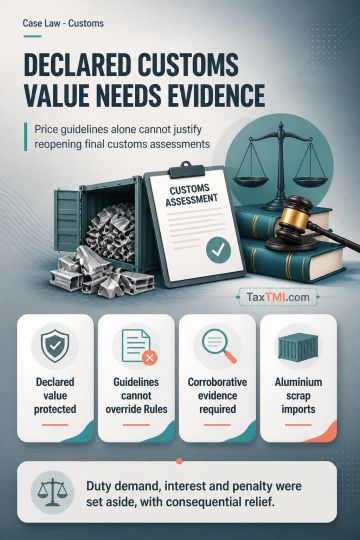
Transaction value cannot be rejected solely on non-statutory valuation guidelines without corroborative evidence supporting reassessment of final cust...
Cross-examination rights and corroborated evidence limit customs penalties for misdeclaration in genuine import transactions involving documented clea...
Tariff classification of vehicle gear components follows the specific gearing entry, displacing motor-vehicle parts classification and related liabili...
Necessary-party requirements limit impleadment of independent entities, while deferred consideration does not create an appealable adverse determinati...
Food supplement classification requires common parlance and authoritative tests, preventing treatment as proprietary Ayurvedic medicines without suppo...
The High Court considered the maintainability of a writ petition seeking a writ of prohibition despite the petitioner not challenging the allegedly erroneous orders. The Court clarified that a writ of prohibition is typically used to supervise and restrict courts or tribunals from acting beyond their jurisdiction. Reference was made to a Supreme Court case emphasizing the distinction between issuing writs of certiorari and prohibition to correct jurisdictional errors. While both writs can correct jurisdictional errors, certiorari corrects after a decision, and prohibition can prevent errors before a decision. In this case, as the appellate authority had already made a determination, issuing a writ of prohibition was deemed unnecessary. The Court found the petitioner's request to defer recovery without seeking adjudication of rights insufficient, leading to the dismissal of the writ petition.
The High Court considered the maintainability of a writ petition seeking a writ of prohibition despite the petitioner not challenging the allegedly erroneous orders. The Court clarified that a writ of prohibition is typically used to supervise and restrict courts or tribunals from acting beyond their jurisdiction. Reference was made to a Supreme Court case emphasizing the distinction between issuing writs of certiorari and prohibition to correct jurisdictional errors. While both writs can correct jurisdictional errors, certiorari corrects after a decision, and prohibition can prevent errors before a decision. In this case, as the appellate authority had already made a determination, issuing a writ of prohibition was deemed unnecessary. The Court found the petitioner's request to defer recovery without seeking adjudication of rights insufficient, leading to the dismissal of the writ petition.
Note: It is a system-generated summary and is for quick reference only.
 TaxTMI
 of 4805

















 Join Channel


 TaxTMI
