Transaction value rejection requires reliable corroboration; refundable VAT is excluded and temporary registration does not defeat new-vehicle exempti...
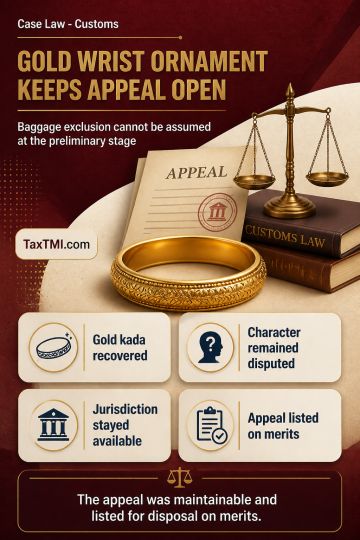
Appellate jurisdiction remains available where a wrist-worn gold ornament cannot conclusively be characterised as imported baggage at the preliminary ...
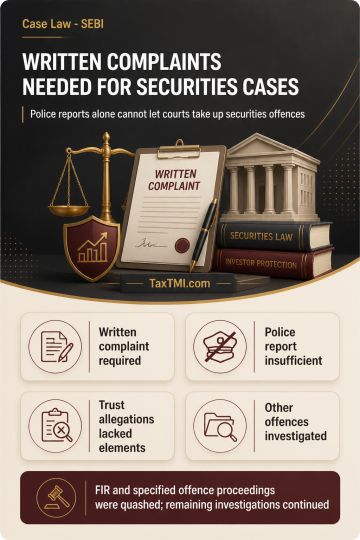
Written complaint requirement bars cognizance on police reports for securities offences, while unsupported breach of trust and cheating allegations fa...
Page of 4801
Press 'Enter' after typing page number.
341 to 360 of 96001 Results
❮
❯
❯❯
0 / 200
Expand Note
Add to Folder
No Folders have been created
+
Are you sure you want to delete "My most important" ?
The High Court considered the maintainability of a writ petition seeking a writ of prohibition despite the petitioner not challenging the allegedly erroneous orders. The Court clarified that a writ of prohibition is typically used to supervise and restrict courts or tribunals from acting beyond their jurisdiction. Reference was made to a Supreme Court case emphasizing the distinction between issuing writs of certiorari and prohibition to correct jurisdictional errors. While both writs can correct jurisdictional errors, certiorari corrects after a decision, and prohibition can prevent errors before a decision. In this case, as the appellate authority had already made a determination, issuing a writ of prohibition was deemed unnecessary. The Court found the petitioner's request to defer recovery without seeking adjudication of rights insufficient, leading to the dismissal of the writ petition.
The High Court considered the maintainability of a writ petition seeking a writ of prohibition despite the petitioner not challenging the allegedly erroneous orders. The Court clarified that a writ of prohibition is typically used to supervise and restrict courts or tribunals from acting beyond their jurisdiction. Reference was made to a Supreme Court case emphasizing the distinction between issuing writs of certiorari and prohibition to correct jurisdictional errors. While both writs can correct jurisdictional errors, certiorari corrects after a decision, and prohibition can prevent errors before a decision. In this case, as the appellate authority had already made a determination, issuing a writ of prohibition was deemed unnecessary. The Court found the petitioner's request to defer recovery without seeking adjudication of rights insufficient, leading to the dismissal of the writ petition.
Note: It is a system-generated summary and is for quick reference only.
 TaxTMI
 of 4801












 Join Channel


 TaxTMI