Transfer pricing and tax deductions upheld on established principles, while employee contributions and warranty provisions returned for fresh examinat...
Captive transfer pricing relies on industrial consumer tariffs, while genuine quotations can benchmark effluent treatment transfers under the Other Me...
Specific tariff classification for ophthalmic instruments and extended limitation principles determine the treatment of duty demands, confiscation, an...
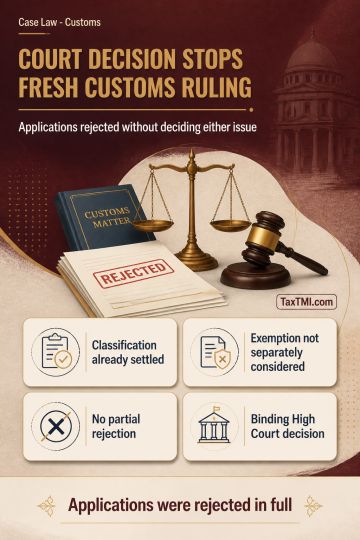
Integrated golf function determines classification, placing launch monitors and simulators under other golf equipment rather than measuring instrument...
Public servant status under anti-corruption law extends to recognised stock exchange leadership; constitutional and sanction challenges do not succeed...
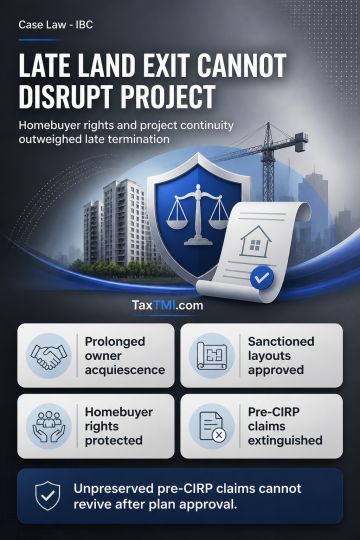
Acquiescence, homebuyer protection and clean-slate resolution principles prevent landowners from disrupting an integrated project through late termina...
The ITAT addressed a case involving a change in accounting policy from Percentage of Completion Method (POCM) to Project Completion Method (PCM) for revenue recognition. The assessee declared a net loss due to the change and the AO added the financial impact as profit, resulting in a significantly higher profit than industry average. The ITAT directed the AO to verify the impact in financial statements for both current and previous years, ensuring correct profit calculation. It emphasized that a change in accounting method does not imply profit understatement, as it is a legitimate decision guided by accounting standards. The ITAT upheld the assessee's right to choose the accounting method and instructed the AO to reevaluate the issue, allowing the assessee a fair opportunity to present their case. The assessee's grounds were allowed for statistical purposes.
The ITAT addressed a case involving a change in accounting policy from Percentage of Completion Method (POCM) to Project Completion Method (PCM) for revenue recognition. The assessee declared a net loss due to the change and the AO added the financial impact as profit, resulting in a significantly higher profit than industry average. The ITAT directed the AO to verify the impact in financial statements for both current and previous years, ensuring correct profit calculation. It emphasized that a change in accounting method does not imply profit understatement, as it is a legitimate decision guided by accounting standards. The ITAT upheld the assessee's right to choose the accounting method and instructed the AO to reevaluate the issue, allowing the assessee a fair opportunity to present their case. The assessee's grounds were allowed for statistical purposes.
Note: It is a system-generated summary and is for quick reference only.
 TaxTMI
 of 4805



















 Join Channel


 TaxTMI