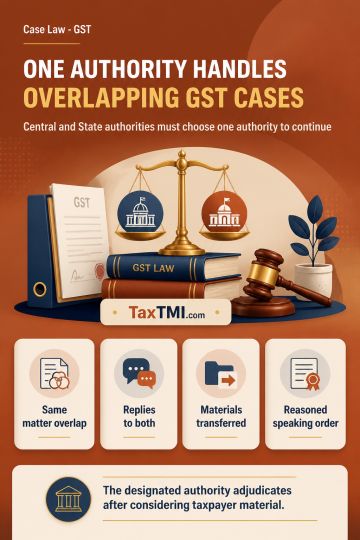
Overlapping GST proceedings require Central and State authorities to designate one competent authority for coordinated adjudication of the same matter...
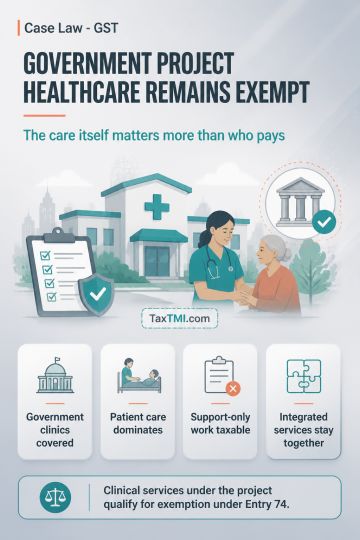
Composite healthcare supplies retain exemption when patient care is the contract's essential character, despite payment through an implementing agency...
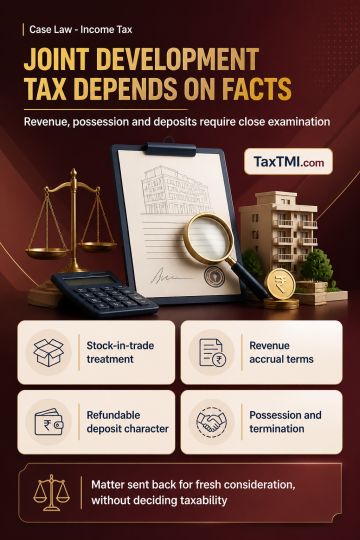
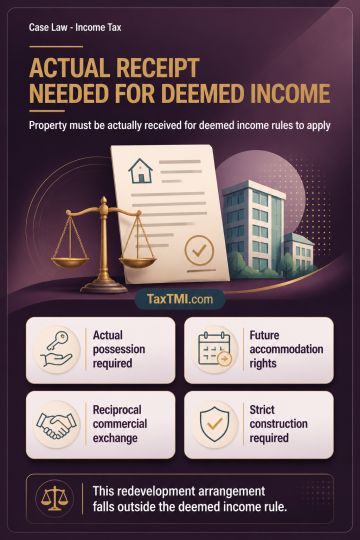
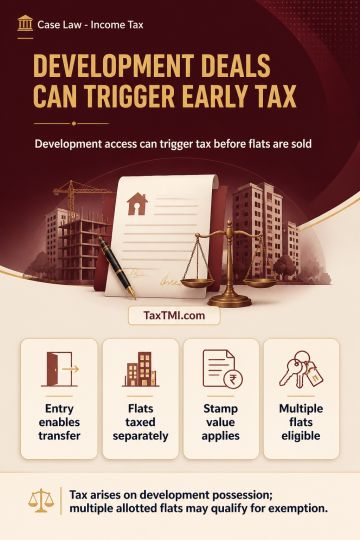
Receipt of immovable property requires actual possession or enjoyment; redevelopment allotments exchanged for tenancy rights fall outside deemed incom...
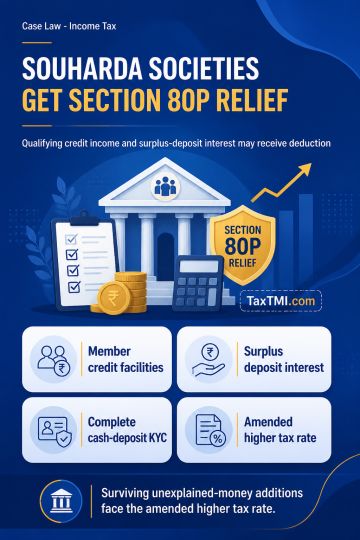
Section 80P deduction covers Souharda credit societies, including qualifying surplus-deposit interest, subject to member KYC verification for cash dep...
The ITAT addressed a case involving a change in accounting policy from Percentage of Completion Method (POCM) to Project Completion Method (PCM) for revenue recognition. The assessee declared a net loss due to the change and the AO added the financial impact as profit, resulting in a significantly higher profit than industry average. The ITAT directed the AO to verify the impact in financial statements for both current and previous years, ensuring correct profit calculation. It emphasized that a change in accounting method does not imply profit understatement, as it is a legitimate decision guided by accounting standards. The ITAT upheld the assessee's right to choose the accounting method and instructed the AO to reevaluate the issue, allowing the assessee a fair opportunity to present their case. The assessee's grounds were allowed for statistical purposes.
The ITAT addressed a case involving a change in accounting policy from Percentage of Completion Method (POCM) to Project Completion Method (PCM) for revenue recognition. The assessee declared a net loss due to the change and the AO added the financial impact as profit, resulting in a significantly higher profit than industry average. The ITAT directed the AO to verify the impact in financial statements for both current and previous years, ensuring correct profit calculation. It emphasized that a change in accounting method does not imply profit understatement, as it is a legitimate decision guided by accounting standards. The ITAT upheld the assessee's right to choose the accounting method and instructed the AO to reevaluate the issue, allowing the assessee a fair opportunity to present their case. The assessee's grounds were allowed for statistical purposes.
Note: It is a system-generated summary and is for quick reference only.
 TaxTMI
 of 4803





 Join Channel


 TaxTMI