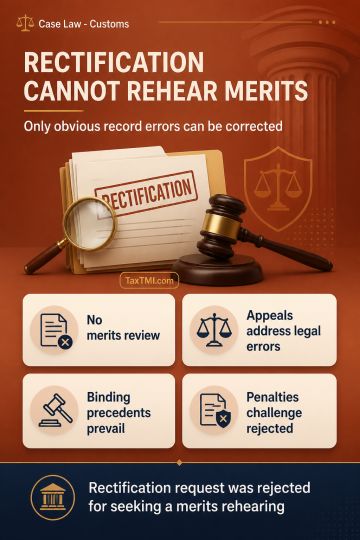
Rectification of mistake remains limited to self-evident record errors, preventing merits review through miscellaneous applications and preserving fin...
Tender creditworthiness conditions may extend to de facto Promoter Directors, with post-participation challenges generally barred absent arbitrariness...
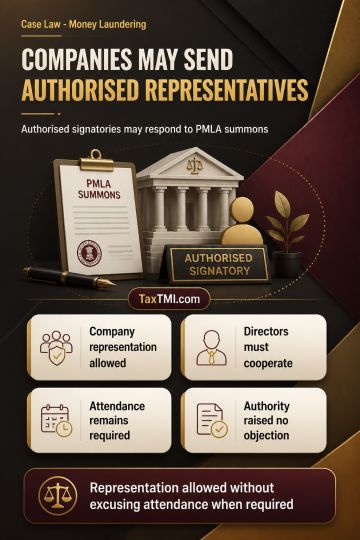
Corporate representation in PMLA summons proceedings permitted through an authorised signatory, subject to directors' continuing cooperation and atten...
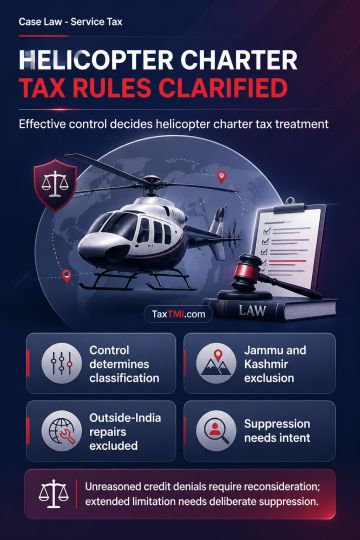
Helicopter charter classification requires effective control analysis, while territorial performance, reasoned credit orders and wilful suppression de...
Specified fund definition expands PAN exemption eligibility for registered alternative investment funds and qualifying International Financial Service...
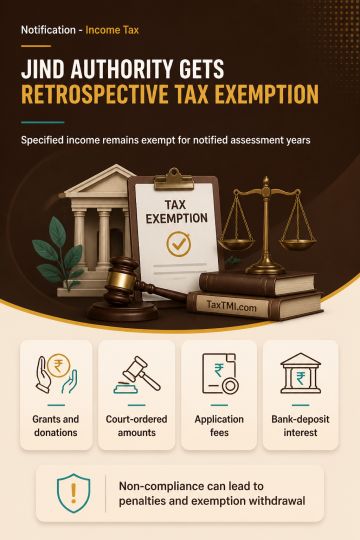
Tax exemption for specified legal-services authority income applies retrospectively, subject to non-commercial activity, unchanged income sources, and...
The ITAT addressed a case involving a change in accounting policy from Percentage of Completion Method (POCM) to Project Completion Method (PCM) for revenue recognition. The assessee declared a net loss due to the change and the AO added the financial impact as profit, resulting in a significantly higher profit than industry average. The ITAT directed the AO to verify the impact in financial statements for both current and previous years, ensuring correct profit calculation. It emphasized that a change in accounting method does not imply profit understatement, as it is a legitimate decision guided by accounting standards. The ITAT upheld the assessee's right to choose the accounting method and instructed the AO to reevaluate the issue, allowing the assessee a fair opportunity to present their case. The assessee's grounds were allowed for statistical purposes.
The ITAT addressed a case involving a change in accounting policy from Percentage of Completion Method (POCM) to Project Completion Method (PCM) for revenue recognition. The assessee declared a net loss due to the change and the AO added the financial impact as profit, resulting in a significantly higher profit than industry average. The ITAT directed the AO to verify the impact in financial statements for both current and previous years, ensuring correct profit calculation. It emphasized that a change in accounting method does not imply profit understatement, as it is a legitimate decision guided by accounting standards. The ITAT upheld the assessee's right to choose the accounting method and instructed the AO to reevaluate the issue, allowing the assessee a fair opportunity to present their case. The assessee's grounds were allowed for statistical purposes.
Note: It is a system-generated summary and is for quick reference only.
 TaxTMI
 of 4803










 Join Channel


 TaxTMI