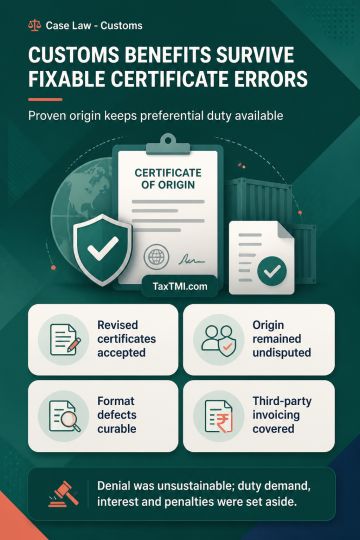
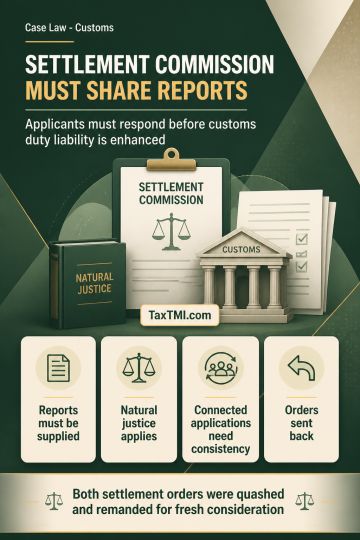
Opportunity to respond to jurisdictional reports is mandatory before customs settlement duty enhancement; connected applications require consistent ad...
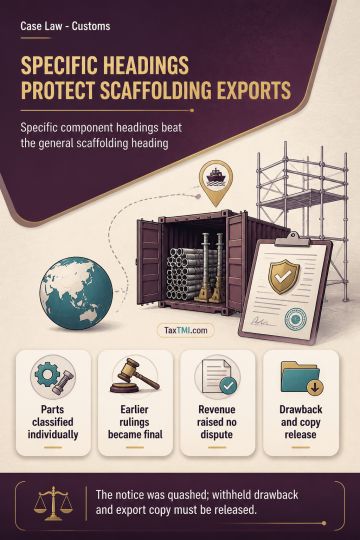
Specific customs headings for scaffolding components prevail over general classification, invalidating misclassification proceedings and enabling with...
Insolvency and BankruptcyJune 22, 2024Case LawsTri
The Tribunal addressed the maintainability of an application for initiation of Corporate Insolvency Resolution Process (CIRP) by an Operational Creditor (OC) against a Corporate Debtor (CD). The OC claimed default in payment by the CD but failed to provide invoices as evidence. Despite a demand notice under Section 8 of the IBC and a bank statement showing a partial payment, the Tribunal found the application time-barred as it was filed beyond the three-year limitation period from the alleged default date. The Tribunal emphasized the importance of proving debt and default before initiating CIRP, ultimately rejecting the application under Section 9 of the IBC.
The Tribunal addressed the maintainability of an application for initiation of Corporate Insolvency Resolution Process (CIRP) by an Operational Creditor (OC) against a Corporate Debtor (CD). The OC claimed default in payment by the CD but failed to provide invoices as evidence. Despite a demand notice under Section 8 of the IBC and a bank statement showing a partial payment, the Tribunal found the application time-barred as it was filed beyond the three-year limitation period from the alleged default date. The Tribunal emphasized the importance of proving debt and default before initiating CIRP, ultimately rejecting the application under Section 9 of the IBC.
Note: It is a system-generated summary and is for quick reference only.
 TaxTMI
 of 4782














 Join Channel


 TaxTMI