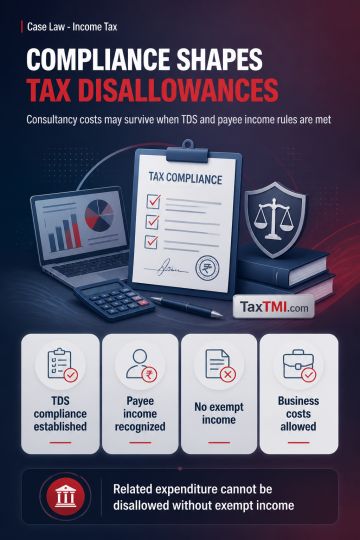
Tax deduction compliance and payee income recognition govern consultancy disallowance, while no exempt income prevents related expenditure disallowanc...
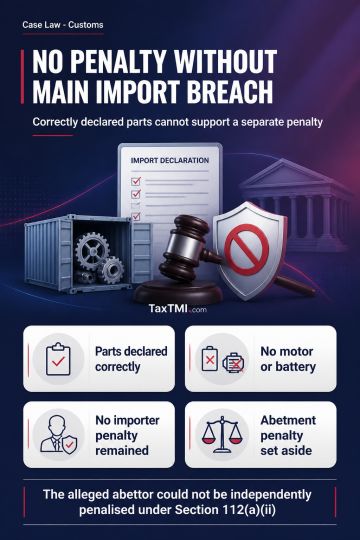
Derivative abetment liability fails when correctly declared imported components establish no underlying improper importation by the principal importer...
Tax exemption for regulatory authority income applies retrospectively, subject to non-commercial activity, unchanged income sources, and return filing...
The Appellate Tribunal considered the entitlement to duty exemption u/s N/N. 25/2023-CUS for the import of Lithium Ion Battery under a Transferrable DFIA License. The issue was whether the battery falls under the description of "Automative Battery" as per the license. The respondent argued that the imported Lithium Battery is a type of automotive battery, supported by a certificate from IIT engineers. The Tribunal emphasized the "capability of use" of the battery, not just similarity to other automotive batteries. It upheld that the DFIA scheme allows for broad categorization under "capable of being used in electrical vehicles." The appeal by the Department was dismissed, granting relief to the respondent.
The Appellate Tribunal considered the entitlement to duty exemption u/s N/N. 25/2023-CUS for the import of Lithium Ion Battery under a Transferrable DFIA License. The issue was whether the battery falls under the description of "Automative Battery" as per the license. The respondent argued that the imported Lithium Battery is a type of automotive battery, supported by a certificate from IIT engineers. The Tribunal emphasized the "capability of use" of the battery, not just similarity to other automotive batteries. It upheld that the DFIA scheme allows for broad categorization under "capable of being used in electrical vehicles." The appeal by the Department was dismissed, granting relief to the respondent.
Note: It is a system-generated summary and is for quick reference only.
 TaxTMI
 of 4803







 Join Channel


 TaxTMI