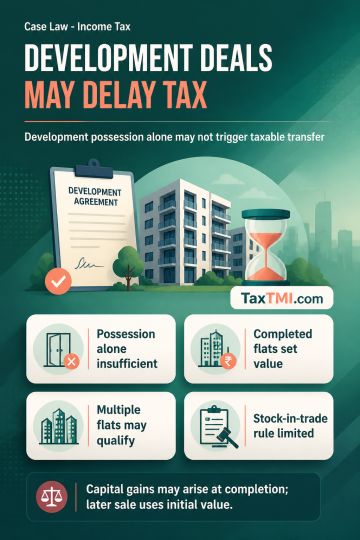
Joint development agreements defer taxable transfer where possession lacks part performance, while completed flats determine consideration and exempti...
Passenger baggage re-export requires true declaration and cannot be granted indirectly through discretionary redemption of undeclared prohibited goods...
The High Court addressed the issue of dishonour of cheque and compounding of the matter. Referring to a Supreme Court case, it discussed the scope of Section 138 of the Negotiable Instruments Act and compounding under Section 147. The court recognized that proceedings u/s 138 are civil in nature with criminal implications. It noted that once the accused settled the liability, compounding under Section 147 was a genuine step towards justice. The court found that the accused and complainant had resolved the dispute, with the complainant having no further grievances as the accused had fulfilled his liability u/s 138. Consequently, the petition was disposed of.
The High Court addressed the issue of dishonour of cheque and compounding of the matter. Referring to a Supreme Court case, it discussed the scope of Section 138 of the Negotiable Instruments Act and compounding under Section 147. The court recognized that proceedings u/s 138 are civil in nature with criminal implications. It noted that once the accused settled the liability, compounding under Section 147 was a genuine step towards justice. The court found that the accused and complainant had resolved the dispute, with the complainant having no further grievances as the accused had fulfilled his liability u/s 138. Consequently, the petition was disposed of.
Note: It is a system-generated summary and is for quick reference only.
 TaxTMI
 of 4794














 Join Channel


 TaxTMI
