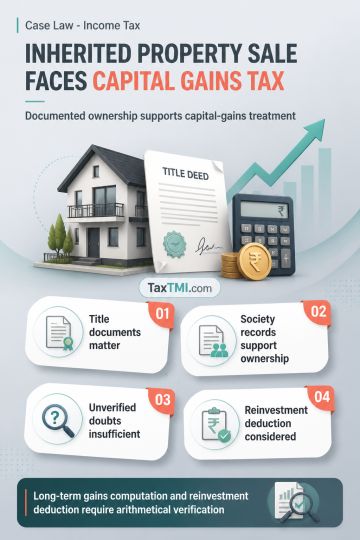
Inherited property sale proceeds require capital-gains treatment where ownership is supported by evidence, not suspicion or unverified signature doubt...
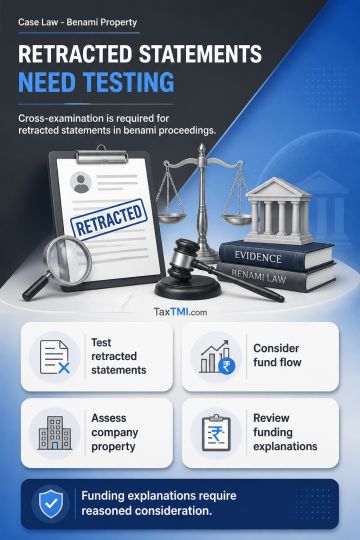
Cross-examination of retracted statements is essential where foundational evidence supports a benami allegation and documented funding explanations re...
Capital-goods exemption covers plant-modernisation accessories, while the import restriction applies only to earlier capital-goods components and spar...
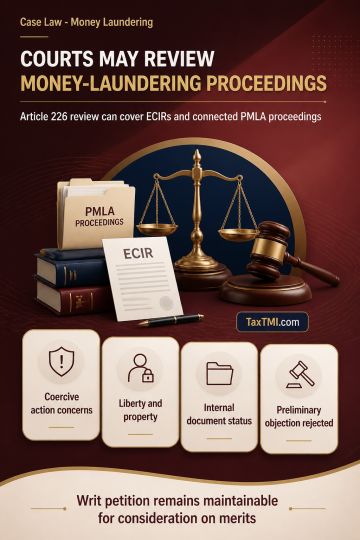
Constitutional judicial review permits challenges to ECIRs and connected money-laundering proceedings where coercive action affects fundamental intere...
The High Court addressed the issue of dishonour of cheque and compounding of the matter. Referring to a Supreme Court case, it discussed the scope of Section 138 of the Negotiable Instruments Act and compounding under Section 147. The court recognized that proceedings u/s 138 are civil in nature with criminal implications. It noted that once the accused settled the liability, compounding under Section 147 was a genuine step towards justice. The court found that the accused and complainant had resolved the dispute, with the complainant having no further grievances as the accused had fulfilled his liability u/s 138. Consequently, the petition was disposed of.
The High Court addressed the issue of dishonour of cheque and compounding of the matter. Referring to a Supreme Court case, it discussed the scope of Section 138 of the Negotiable Instruments Act and compounding under Section 147. The court recognized that proceedings u/s 138 are civil in nature with criminal implications. It noted that once the accused settled the liability, compounding under Section 147 was a genuine step towards justice. The court found that the accused and complainant had resolved the dispute, with the complainant having no further grievances as the accused had fulfilled his liability u/s 138. Consequently, the petition was disposed of.
Note: It is a system-generated summary and is for quick reference only.
 TaxTMI
 of 4792







 Join Channel


 TaxTMI