Fair-rent assessment requires consideration of lease terms, valuation principles and prevailing market rent; the certificate was quashed for fresh rev...
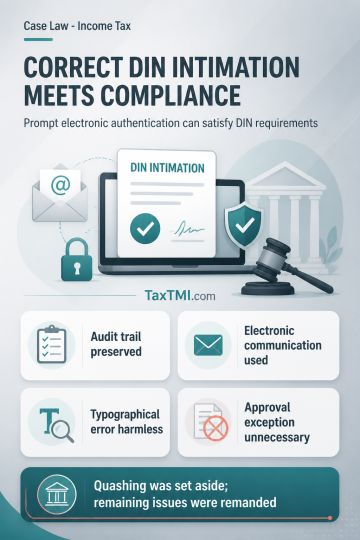
Document Identification Number compliance is satisfied when electronically communicated orders are promptly authenticated through a correctly identifi...
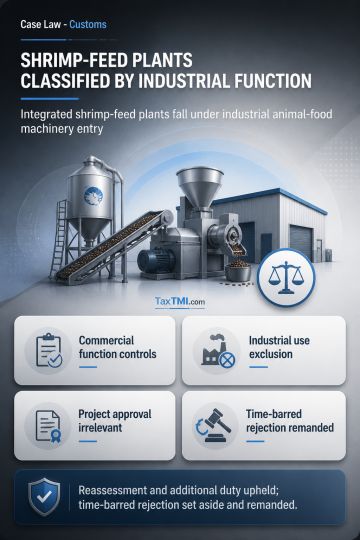
Industrial shrimp-feed machinery classification follows its commercial function, placing integrated production plants under the specific industrial fo...
The National Company Law Appellate Tribunal, New Delhi, addressed the admissibility of a section 9 application for initiation of Corporate Insolvency Resolution Process (CIRP) in the presence of pre-existing disputes between the parties. Referring to the Supreme Court's ruling in Mobilox Innovations Pvt Ltd Vs Kirusa Software Pvt Ltd, it was emphasized that a pre-existing dispute must be more than a feeble legal argument or unsupported assertion. The Tribunal noted that the existence of claims or counterclaims, even without a reply to a demand notice, could establish a pre-existing dispute warranting rejection of a Section 9 petition. In this case, the Corporate Debtor had already initiated arbitration proceedings prior to the Section 9 petition, indicating a pre-existing dispute that could not be resolved summarily. Consequently, the Tribunal allowed the appeal and directed the dismissal of the Section 9 petition.
The National Company Law Appellate Tribunal, New Delhi, addressed the admissibility of a section 9 application for initiation of Corporate Insolvency Resolution Process (CIRP) in the presence of pre-existing disputes between the parties. Referring to the Supreme Court's ruling in Mobilox Innovations Pvt Ltd Vs Kirusa Software Pvt Ltd, it was emphasized that a pre-existing dispute must be more than a feeble legal argument or unsupported assertion. The Tribunal noted that the existence of claims or counterclaims, even without a reply to a demand notice, could establish a pre-existing dispute warranting rejection of a Section 9 petition. In this case, the Corporate Debtor had already initiated arbitration proceedings prior to the Section 9 petition, indicating a pre-existing dispute that could not be resolved summarily. Consequently, the Tribunal allowed the appeal and directed the dismissal of the Section 9 petition.
Note: It is a system-generated summary and is for quick reference only.
 TaxTMI
 of 4805







 Join Channel


 TaxTMI
