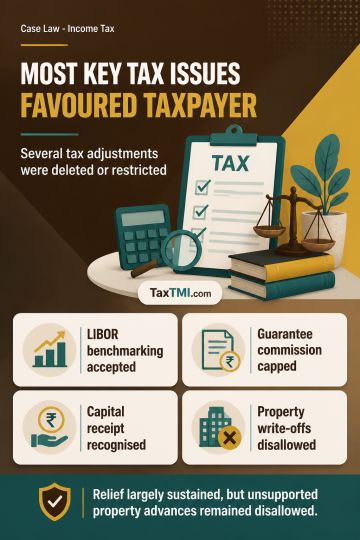
Transfer-pricing benchmarking and capital-receipt principles sustained taxpayer relief, while unsupported property-advance write-offs remained disallo...
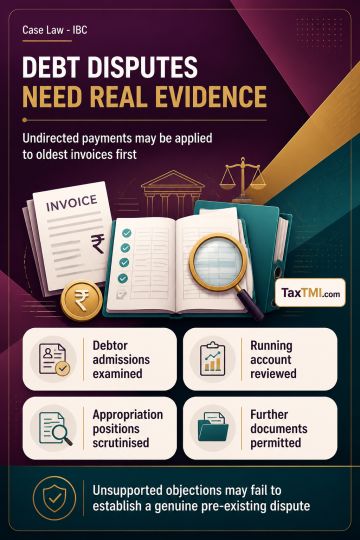
Pre-existing operational debt disputes require genuine evidence, while undirected running-account payments may be appropriated on a first-in-first-out...
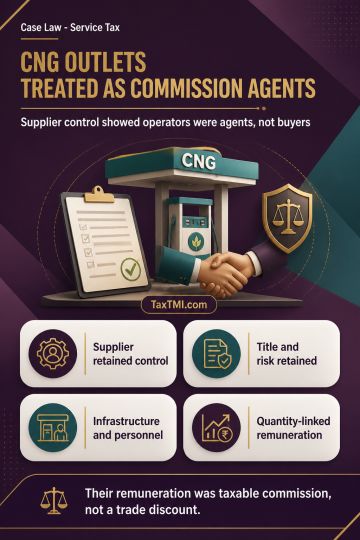
Agency in CNG distribution makes outlet operators commission agents, rendering taxable Business Auxiliary Service rather than purchasing goods for res...
The National Company Law Appellate Tribunal, New Delhi, addressed the admissibility of a section 9 application for initiation of Corporate Insolvency Resolution Process (CIRP) in the presence of pre-existing disputes between the parties. Referring to the Supreme Court's ruling in Mobilox Innovations Pvt Ltd Vs Kirusa Software Pvt Ltd, it was emphasized that a pre-existing dispute must be more than a feeble legal argument or unsupported assertion. The Tribunal noted that the existence of claims or counterclaims, even without a reply to a demand notice, could establish a pre-existing dispute warranting rejection of a Section 9 petition. In this case, the Corporate Debtor had already initiated arbitration proceedings prior to the Section 9 petition, indicating a pre-existing dispute that could not be resolved summarily. Consequently, the Tribunal allowed the appeal and directed the dismissal of the Section 9 petition.
The National Company Law Appellate Tribunal, New Delhi, addressed the admissibility of a section 9 application for initiation of Corporate Insolvency Resolution Process (CIRP) in the presence of pre-existing disputes between the parties. Referring to the Supreme Court's ruling in Mobilox Innovations Pvt Ltd Vs Kirusa Software Pvt Ltd, it was emphasized that a pre-existing dispute must be more than a feeble legal argument or unsupported assertion. The Tribunal noted that the existence of claims or counterclaims, even without a reply to a demand notice, could establish a pre-existing dispute warranting rejection of a Section 9 petition. In this case, the Corporate Debtor had already initiated arbitration proceedings prior to the Section 9 petition, indicating a pre-existing dispute that could not be resolved summarily. Consequently, the Tribunal allowed the appeal and directed the dismissal of the Section 9 petition.
Note: It is a system-generated summary and is for quick reference only.
 TaxTMI
 of 4803








 Join Channel


 TaxTMI
