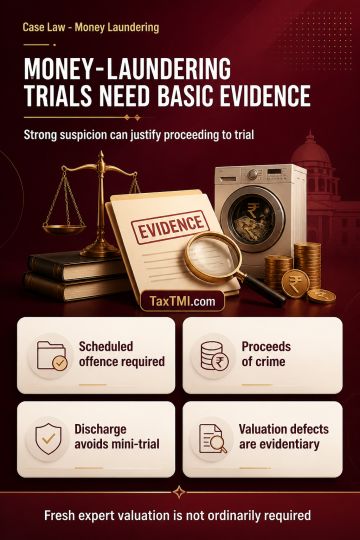
Provisional attachment of laundered funds and equivalent-value property sustained, with statutory protection limited to pension, gratuity and providen...
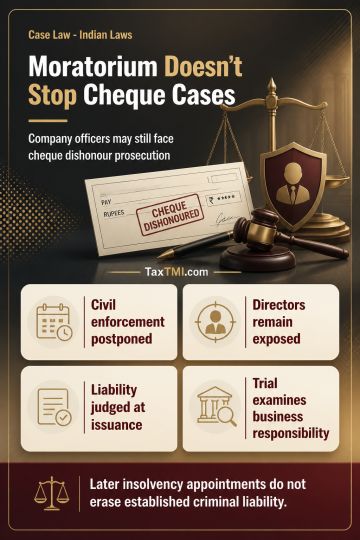
Insolvency moratorium does not shield company officers from cheque dishonour prosecution for liability arising before corporate insolvency proceedings...
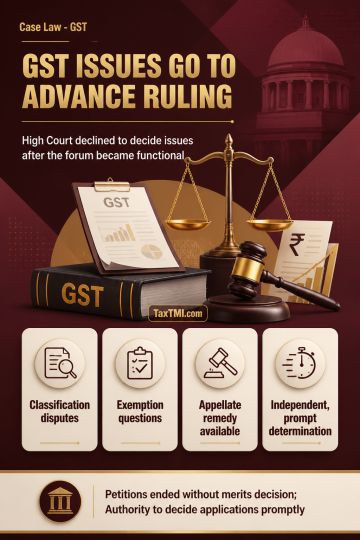
Advance-ruling mechanism governs pending GST classification, exemption and taxability disputes, limiting writ review once the specialised forum functi...
The National Company Law Appellate Tribunal, New Delhi, addressed the admissibility of a section 9 application for initiation of Corporate Insolvency Resolution Process (CIRP) in the presence of pre-existing disputes between the parties. Referring to the Supreme Court's ruling in Mobilox Innovations Pvt Ltd Vs Kirusa Software Pvt Ltd, it was emphasized that a pre-existing dispute must be more than a feeble legal argument or unsupported assertion. The Tribunal noted that the existence of claims or counterclaims, even without a reply to a demand notice, could establish a pre-existing dispute warranting rejection of a Section 9 petition. In this case, the Corporate Debtor had already initiated arbitration proceedings prior to the Section 9 petition, indicating a pre-existing dispute that could not be resolved summarily. Consequently, the Tribunal allowed the appeal and directed the dismissal of the Section 9 petition.
The National Company Law Appellate Tribunal, New Delhi, addressed the admissibility of a section 9 application for initiation of Corporate Insolvency Resolution Process (CIRP) in the presence of pre-existing disputes between the parties. Referring to the Supreme Court's ruling in Mobilox Innovations Pvt Ltd Vs Kirusa Software Pvt Ltd, it was emphasized that a pre-existing dispute must be more than a feeble legal argument or unsupported assertion. The Tribunal noted that the existence of claims or counterclaims, even without a reply to a demand notice, could establish a pre-existing dispute warranting rejection of a Section 9 petition. In this case, the Corporate Debtor had already initiated arbitration proceedings prior to the Section 9 petition, indicating a pre-existing dispute that could not be resolved summarily. Consequently, the Tribunal allowed the appeal and directed the dismissal of the Section 9 petition.
Note: It is a system-generated summary and is for quick reference only.
 TaxTMI
 of 4803






 Join Channel


 TaxTMI
