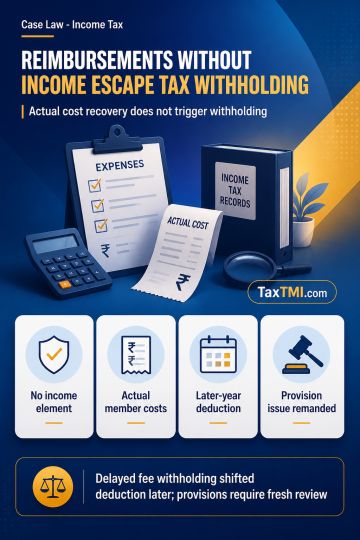
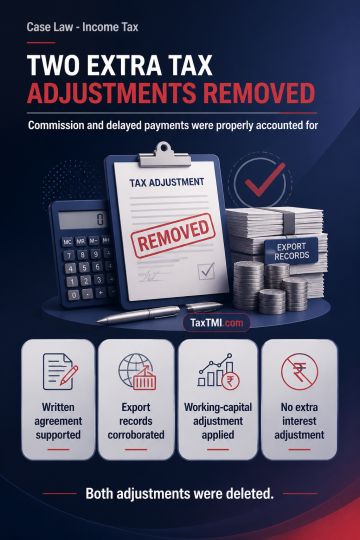
Pure reimbursement without income element escapes tax withholding, while delayed withholding and unsupported provisions face deferred or renewed scrut...
Public benefit requirement defeats charitable registration where residents' association services are reciprocal, member-only facilities governed by mu...
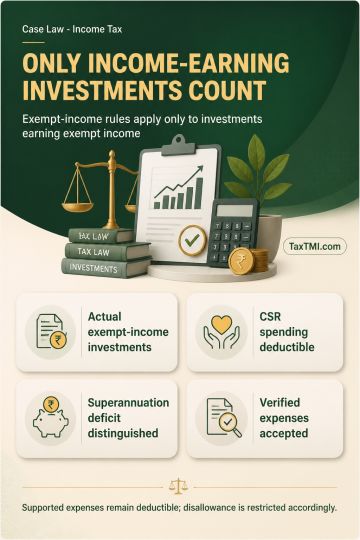
Exempt-income expenditure disallowance is confined to investments that actually generated exempt income, while supported business expenses remain dedu...
Objective characteristics and principal use govern mining-tyre classification, while fresh advance ruling applications may rely on additional technica...
The National Company Law Appellate Tribunal, New Delhi, addressed the admissibility of a section 9 application for initiation of Corporate Insolvency Resolution Process (CIRP) in the presence of pre-existing disputes between the parties. Referring to the Supreme Court's ruling in Mobilox Innovations Pvt Ltd Vs Kirusa Software Pvt Ltd, it was emphasized that a pre-existing dispute must be more than a feeble legal argument or unsupported assertion. The Tribunal noted that the existence of claims or counterclaims, even without a reply to a demand notice, could establish a pre-existing dispute warranting rejection of a Section 9 petition. In this case, the Corporate Debtor had already initiated arbitration proceedings prior to the Section 9 petition, indicating a pre-existing dispute that could not be resolved summarily. Consequently, the Tribunal allowed the appeal and directed the dismissal of the Section 9 petition.
The National Company Law Appellate Tribunal, New Delhi, addressed the admissibility of a section 9 application for initiation of Corporate Insolvency Resolution Process (CIRP) in the presence of pre-existing disputes between the parties. Referring to the Supreme Court's ruling in Mobilox Innovations Pvt Ltd Vs Kirusa Software Pvt Ltd, it was emphasized that a pre-existing dispute must be more than a feeble legal argument or unsupported assertion. The Tribunal noted that the existence of claims or counterclaims, even without a reply to a demand notice, could establish a pre-existing dispute warranting rejection of a Section 9 petition. In this case, the Corporate Debtor had already initiated arbitration proceedings prior to the Section 9 petition, indicating a pre-existing dispute that could not be resolved summarily. Consequently, the Tribunal allowed the appeal and directed the dismissal of the Section 9 petition.
Note: It is a system-generated summary and is for quick reference only.
 TaxTMI
 of 4803









 Join Channel


 TaxTMI
