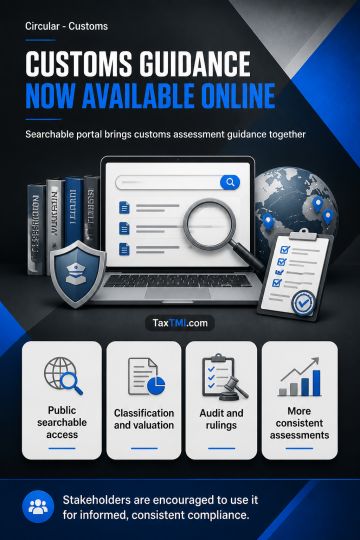
Customs Assessment Portal centralises classification and valuation guidance to support consistent, transparent and informed compliance across stakehol...
GST refunds for cancelled air tickets remain available when passenger reimbursements defeat unjust enrichment and credit-note adjustment is unavailabl...
The High Court dismissed a review petition regarding a fraudulent Input Tax Credit (I.T.C.) claim for inward supplies. The petitioner had obtained I.T.C. based on invoices from non-existent firms. Special Investigation Branch found the firms to be bogus with no actual supply of goods. Appellate authority's decision was upheld as it considered the evidence on record. The review petition was rejected as new evidence presented could have been submitted earlier and did not refute the findings. The court found no reason to review the earlier order and dismissed the petition. The case involved Order XLVII, Rule 1 (1) of the Civil Procedure Code (C.P.C.).
The High Court dismissed a review petition regarding a fraudulent Input Tax Credit (I.T.C.) claim for inward supplies. The petitioner had obtained I.T.C. based on invoices from non-existent firms. Special Investigation Branch found the firms to be bogus with no actual supply of goods. Appellate authority's decision was upheld as it considered the evidence on record. The review petition was rejected as new evidence presented could have been submitted earlier and did not refute the findings. The court found no reason to review the earlier order and dismissed the petition. The case involved Order XLVII, Rule 1 (1) of the Civil Procedure Code (C.P.C.).
Note: It is a system-generated summary and is for quick reference only.
 TaxTMI
  TaxTMI
 of 4916