Mutual fund maturity rules require proper rollover, redemption, disclosure, and due diligence; investor gains cannot excuse regulatory breaches or pen...
Threshold exemption excludes exempt services, while stamp-paper purchases avoid reverse charge; consequential service tax penalties were also set asid...
Employee conflict disclosures and investment restrictions expand with new recusal duties, post-employment limits, and compliance reporting requirement...
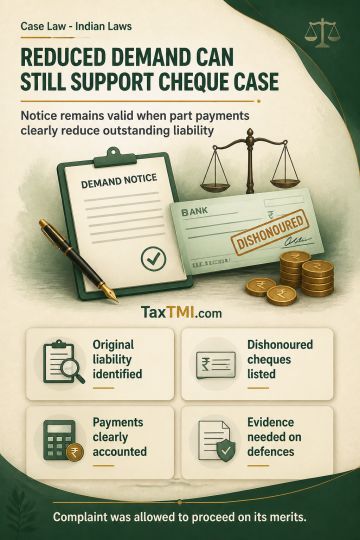
The Delhi High Court addressed the consolidation of multiple offences in a complaint u/s 138 of the Negotiable Instruments Act, 1881. It interpreted Section 219 of the CrPC in light of a Supreme Court judgment recommending trials for similar offences within 12 months. The court clarified that sending a single notice of demand for multiple dishonored cheques doesn't affect the consolidation of offences. It emphasized the importance of cause of action in maintaining a complaint u/s 138 of the NI Act. The judgment affirmed that multiple cheques from the same transaction can be tried together u/s 220 of the CrPC. The appeal was dismissed.
The Delhi High Court addressed the consolidation of multiple offences in a complaint u/s 138 of the Negotiable Instruments Act, 1881. It interpreted Section 219 of the CrPC in light of a Supreme Court judgment recommending trials for similar offences within 12 months. The court clarified that sending a single notice of demand for multiple dishonored cheques doesn't affect the consolidation of offences. It emphasized the importance of cause of action in maintaining a complaint u/s 138 of the NI Act. The judgment affirmed that multiple cheques from the same transaction can be tried together u/s 220 of the CrPC. The appeal was dismissed.
Note: It is a system-generated summary and is for quick reference only.
 TaxTMI
 of 4796
















 Join Channel


 TaxTMI
