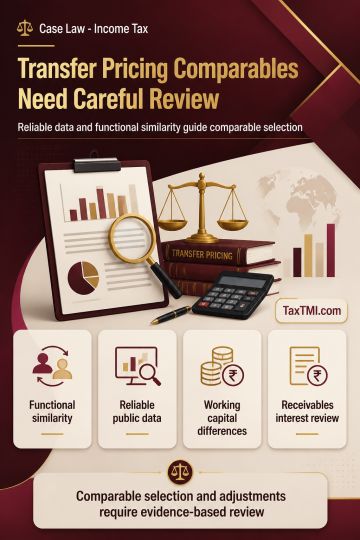
Transfer pricing comparability requires functional alignment, reliable financial data, and careful review of working capital and receivables adjustmen...
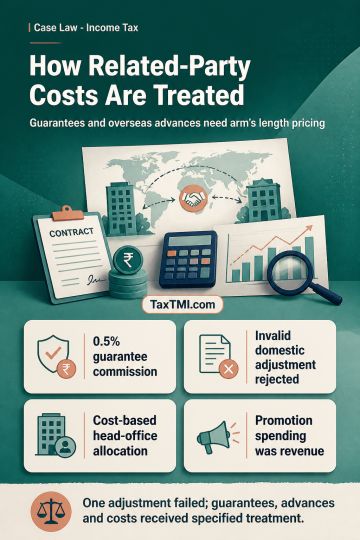
Transfer pricing rules require benchmarking corporate guarantees and associated-enterprise advances, while invalid domestic-transaction adjustments ca...
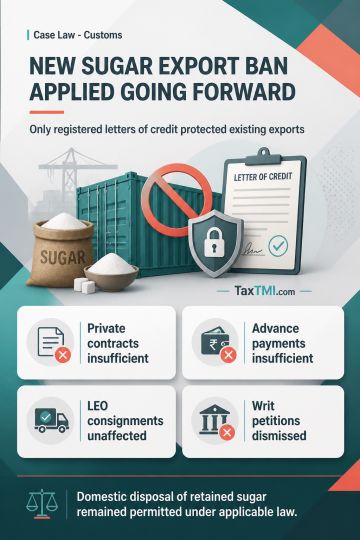
Prospective sugar export prohibition required registered letters of credit; private contracts and export quotas created no enforceable continuation ri...
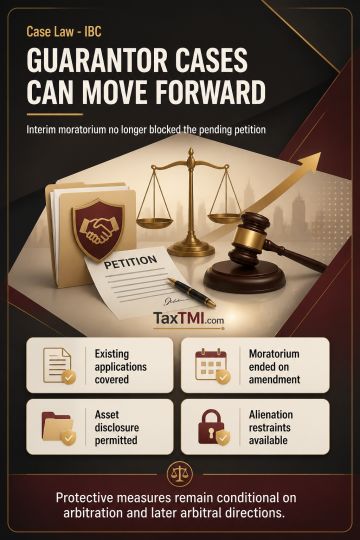
Retroactive interim-moratorium exclusion permits protective asset disclosure and preservation measures against personal guarantors pending arbitration...
In the case before ITAT Delhi, the issue pertained to the addition u/s 68 concerning the taxability of unsecured loans. The tribunal held that the Assessing Officer (AO) failed to conduct an independent inquiry as the assessee did not provide necessary details. The CIT(A) did not investigate or allow the AO to verify the creditworthiness of the parties and the genuineness of the transactions. Referring to legal precedents, the tribunal emphasized that proving the identity of creditors, genuineness of transactions, and creditworthiness discharges the assessee's burden. The burden then shifts to the revenue to prove ownership of the amounts. The tribunal concluded that the documents filed by the assessee were not adequately examined, warranting a reasonable opportunity for the assessee to address any shortcomings. The Revenue's appeal was allowed for statistical purposes.
In the case before ITAT Delhi, the issue pertained to the addition u/s 68 concerning the taxability of unsecured loans. The tribunal held that the Assessing Officer (AO) failed to conduct an independent inquiry as the assessee did not provide necessary details. The CIT(A) did not investigate or allow the AO to verify the creditworthiness of the parties and the genuineness of the transactions. Referring to legal precedents, the tribunal emphasized that proving the identity of creditors, genuineness of transactions, and creditworthiness discharges the assessee's burden. The burden then shifts to the revenue to prove ownership of the amounts. The tribunal concluded that the documents filed by the assessee were not adequately examined, warranting a reasonable opportunity for the assessee to address any shortcomings. The Revenue's appeal was allowed for statistical purposes.
Note: It is a system-generated summary and is for quick reference only.
 TaxTMI
 of 4782







 Join Channel


 TaxTMI