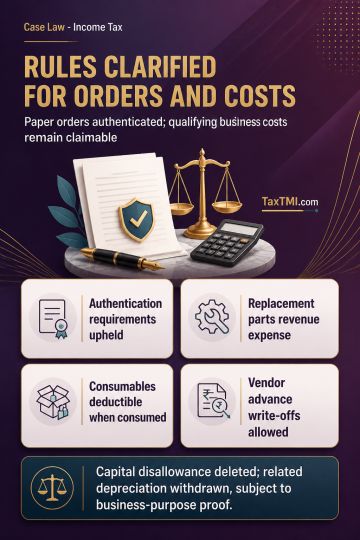
Authentication of paper assessment orders upheld, while qualifying repairs, consumables and vendor advance write-offs remain deductible business claim...
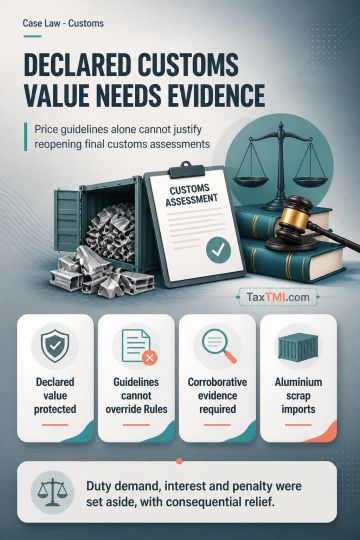
Transaction value cannot be rejected solely on non-statutory valuation guidelines without corroborative evidence supporting reassessment of final cust...
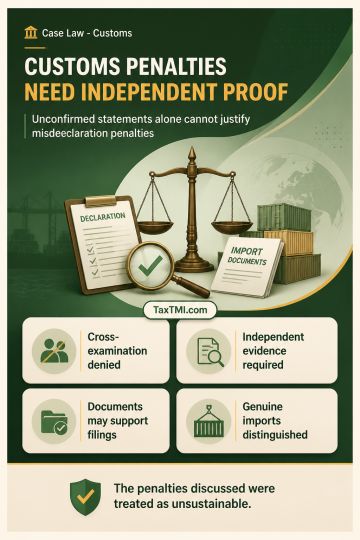
Cross-examination rights and corroborated evidence limit customs penalties for misdeclaration in genuine import transactions involving documented clea...
Page of 4782
Press 'Enter' after typing page number.
301 to 320 of 95636 Results
❮
❯
❯❯
0 / 200
Expand Note
Add to Folder
No Folders have been created
+
Are you sure you want to delete "My most important" ?
In the case before ITAT Delhi, the issue pertained to the addition u/s 68 concerning the taxability of unsecured loans. The tribunal held that the Assessing Officer (AO) failed to conduct an independent inquiry as the assessee did not provide necessary details. The CIT(A) did not investigate or allow the AO to verify the creditworthiness of the parties and the genuineness of the transactions. Referring to legal precedents, the tribunal emphasized that proving the identity of creditors, genuineness of transactions, and creditworthiness discharges the assessee's burden. The burden then shifts to the revenue to prove ownership of the amounts. The tribunal concluded that the documents filed by the assessee were not adequately examined, warranting a reasonable opportunity for the assessee to address any shortcomings. The Revenue's appeal was allowed for statistical purposes.
In the case before ITAT Delhi, the issue pertained to the addition u/s 68 concerning the taxability of unsecured loans. The tribunal held that the Assessing Officer (AO) failed to conduct an independent inquiry as the assessee did not provide necessary details. The CIT(A) did not investigate or allow the AO to verify the creditworthiness of the parties and the genuineness of the transactions. Referring to legal precedents, the tribunal emphasized that proving the identity of creditors, genuineness of transactions, and creditworthiness discharges the assessee's burden. The burden then shifts to the revenue to prove ownership of the amounts. The tribunal concluded that the documents filed by the assessee were not adequately examined, warranting a reasonable opportunity for the assessee to address any shortcomings. The Revenue's appeal was allowed for statistical purposes.
Note: It is a system-generated summary and is for quick reference only.
 TaxTMI
 of 4782









 Join Channel


 TaxTMI