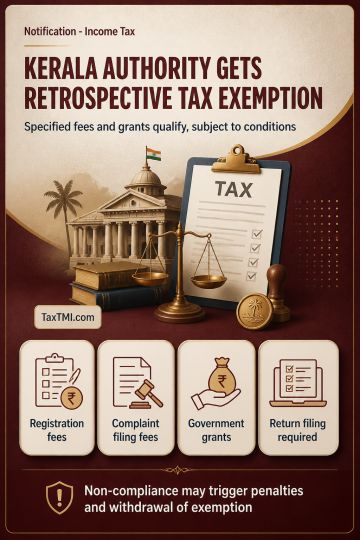
Tax exemption for regulatory authority income applies retrospectively, subject to non-commercial activity, unchanged income sources, and return filing...
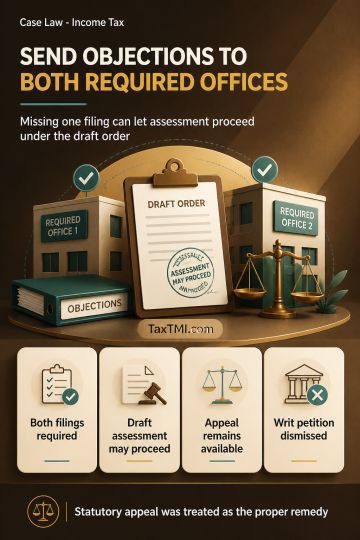
Dispute Resolution Panel objections must reach both prescribed forums; otherwise assessment may proceed and statutory appeal remains the proper remedy...
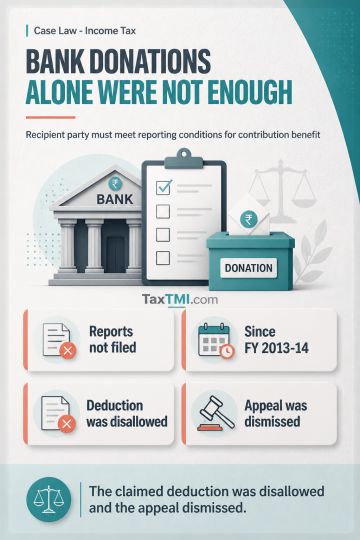
Political contribution deductions require recipient party compliance with contribution-reporting conditions; banking-channel donations alone do not qu...
Page of 4786
Press 'Enter' after typing page number.
341 to 360 of 95715 Results
❮
❯
❯❯
0 / 200
Expand Note
Add to Folder
No Folders have been created
+
Are you sure you want to delete "My most important" ?
The case involved a dispute over the writ jurisdiction of the High Court post privatization of (AIL) by a private corporate entity. - Erstwhile Public sector undertaking (PSU) - The issue was whether the High Court could exercise writ jurisdiction over a private entity. The employee-writ petitioner argued that the petition was maintainable against the respondent at the time of filing. Various High Courts had held that a government company becoming a private entity would make it immune from writ jurisdiction. The Supreme Court held that the High Court could not issue a writ to a private entity that had taken over during the pendency of the case. The delay in disposal of the writ petitions was considered a valid ground to continue the case, but the appellants were directed to seek remedy from another forum. The appeal was dismissed, upholding the decision of the Bombay High Court to deny equitable relief and require the appellants to approach the appropriate forum for their grievances.
The case involved a dispute over the writ jurisdiction of the High Court post privatization of (AIL) by a private corporate entity. - Erstwhile Public sector undertaking (PSU) - The issue was whether the High Court could exercise writ jurisdiction over a private entity. The employee-writ petitioner argued that the petition was maintainable against the respondent at the time of filing. Various High Courts had held that a government company becoming a private entity would make it immune from writ jurisdiction. The Supreme Court held that the High Court could not issue a writ to a private entity that had taken over during the pendency of the case. The delay in disposal of the writ petitions was considered a valid ground to continue the case, but the appellants were directed to seek remedy from another forum. The appeal was dismissed, upholding the decision of the Bombay High Court to deny equitable relief and require the appellants to approach the appropriate forum for their grievances.
Note: It is a system-generated summary and is for quick reference only.
 TaxTMI
 of 4786



 Join Channel


 TaxTMI