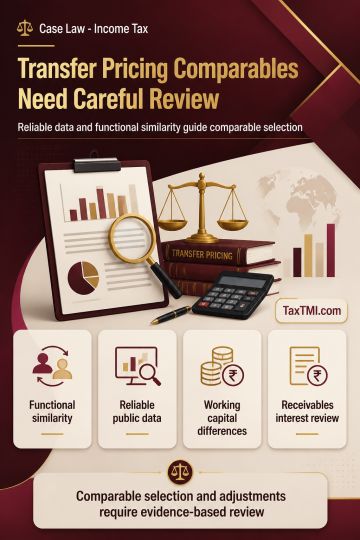
Transfer pricing comparability requires functional alignment, reliable financial data, and careful review of working capital and receivables adjustmen...
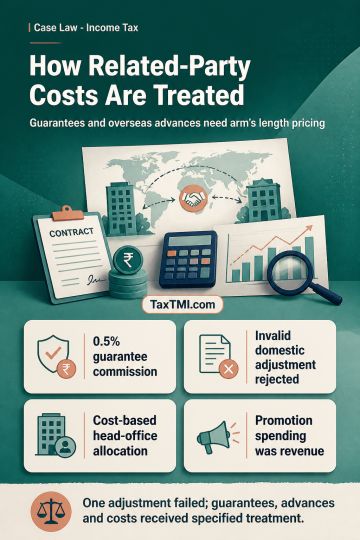
Transfer pricing rules require benchmarking corporate guarantees and associated-enterprise advances, while invalid domestic-transaction adjustments ca...
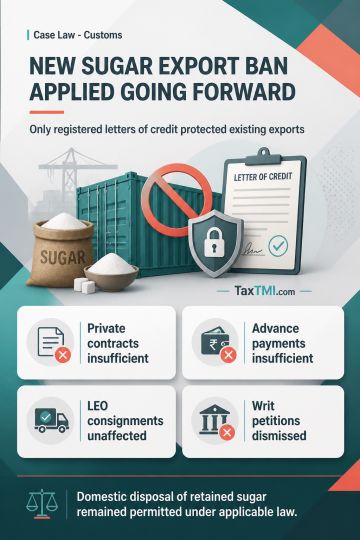
Prospective sugar export prohibition required registered letters of credit; private contracts and export quotas created no enforceable continuation ri...
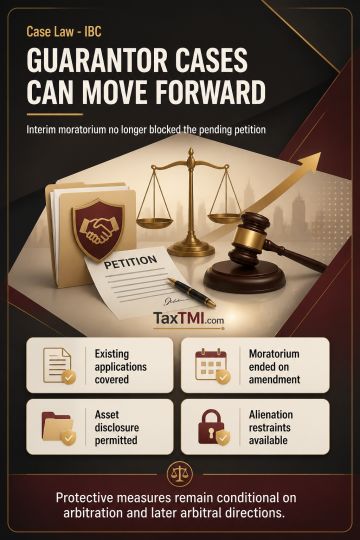
Retroactive interim-moratorium exclusion permits protective asset disclosure and preservation measures against personal guarantors pending arbitration...
The case involved a dispute over the writ jurisdiction of the High Court post privatization of (AIL) by a private corporate entity. - Erstwhile Public sector undertaking (PSU) - The issue was whether the High Court could exercise writ jurisdiction over a private entity. The employee-writ petitioner argued that the petition was maintainable against the respondent at the time of filing. Various High Courts had held that a government company becoming a private entity would make it immune from writ jurisdiction. The Supreme Court held that the High Court could not issue a writ to a private entity that had taken over during the pendency of the case. The delay in disposal of the writ petitions was considered a valid ground to continue the case, but the appellants were directed to seek remedy from another forum. The appeal was dismissed, upholding the decision of the Bombay High Court to deny equitable relief and require the appellants to approach the appropriate forum for their grievances.
The case involved a dispute over the writ jurisdiction of the High Court post privatization of (AIL) by a private corporate entity. - Erstwhile Public sector undertaking (PSU) - The issue was whether the High Court could exercise writ jurisdiction over a private entity. The employee-writ petitioner argued that the petition was maintainable against the respondent at the time of filing. Various High Courts had held that a government company becoming a private entity would make it immune from writ jurisdiction. The Supreme Court held that the High Court could not issue a writ to a private entity that had taken over during the pendency of the case. The delay in disposal of the writ petitions was considered a valid ground to continue the case, but the appellants were directed to seek remedy from another forum. The appeal was dismissed, upholding the decision of the Bombay High Court to deny equitable relief and require the appellants to approach the appropriate forum for their grievances.
Note: It is a system-generated summary and is for quick reference only.
 TaxTMI
 of 4784





 Join Channel


 TaxTMI