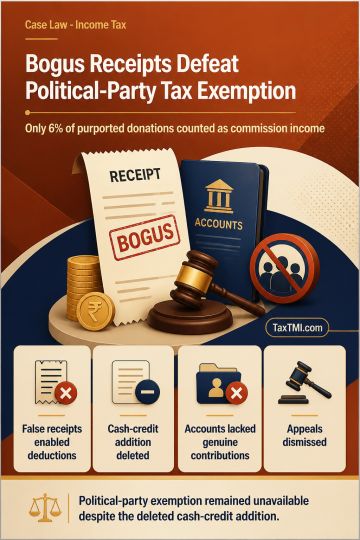
Bogus donation receipts justified commission income assessment and defeated political-party tax exemption for inaccurate accounts and reporting failur...
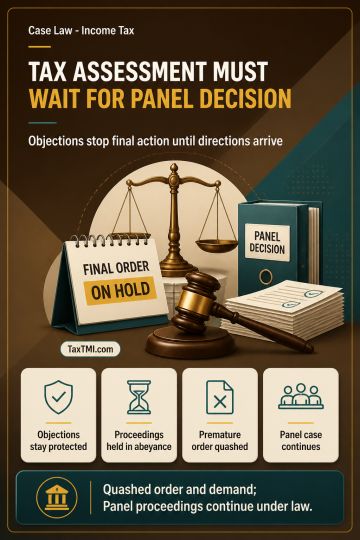
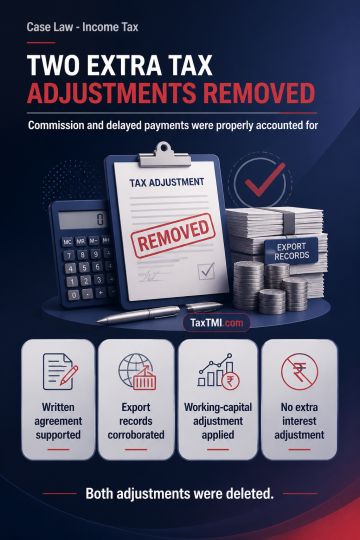
Pure reimbursement without income element escapes tax withholding, while delayed withholding and unsupported provisions face deferred or renewed scrut...
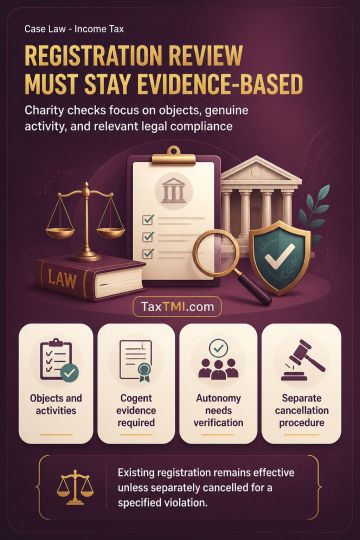
Public benefit requirement defeats charitable registration where residents' association services are reciprocal, member-only facilities governed by mu...
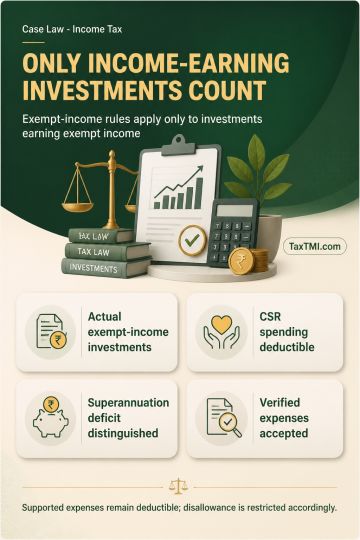
Exempt-income expenditure disallowance is confined to investments that actually generated exempt income, while supported business expenses remain dedu...
The Madras High Court addressed a case involving best judgment assessment due to the petitioner's failure to file GST returns within the prescribed time limit. The court noted that the limitation period for filing returns was extended to 120 days from 30 days, effective from 01.10.2023. However, traders prior to this period were not eligible for the extended timeframe. The petitioner argued that the actual tax liability was Rs. 2 lakhs, paid belatedly in August 2023, while the best judgment amount was Rs. 5 lakhs. The court allowed the petitioner to apply for condonation of delay, showing a sympathetic approach, and disposed of the writ petition accordingly.
The Madras High Court addressed a case involving best judgment assessment due to the petitioner's failure to file GST returns within the prescribed time limit. The court noted that the limitation period for filing returns was extended to 120 days from 30 days, effective from 01.10.2023. However, traders prior to this period were not eligible for the extended timeframe. The petitioner argued that the actual tax liability was Rs. 2 lakhs, paid belatedly in August 2023, while the best judgment amount was Rs. 5 lakhs. The court allowed the petitioner to apply for condonation of delay, showing a sympathetic approach, and disposed of the writ petition accordingly.
Note: It is a system-generated summary and is for quick reference only.
 TaxTMI
 of 4792







 Join Channel


 TaxTMI